

Best Things to Do in France: Experiences Worth Booking
France isn't just about ticking off famous landmarks—it's about immersing yourself in experiences that reveal why this country has captivated travelers for centuries. Best things to do in France range from intimate cooking classes in Parisian kitchens to kayaking through turquoise gorges in Provence, from sipping Champagne in historic cellars to hunting truffles in the Périgord. The challenge isn't finding activities; it's choosing which ones deserve your time and budget.
Key Takeaways
| Question | Answer |
|---|---|
| What is the best time to visit? | April–May and September–October offer ideal weather and fewer crowds than summer. June is excellent for lavender tours in Provence. |
| How much does it cost? | Budget €50–150 for group tours, €200–500 for private experiences. Cooking classes range €80–250; wine tastings €40–120 per person. |
| How do I get there? | Fly into Paris, Lyon, or Nice; use trains to reach regional destinations. Book transport in advance for best rates. |
| Is it safe? | France is generally safe for tourists. Use standard precautions in major cities; rural areas are very safe. |
| What should I book in advance? | Popular cooking classes, wine tastings, château tours, and hot air balloon rides (3–6 weeks ahead). Day trips from major cities can often be booked 1–2 weeks prior. |
1. Wine Tasting and Château Tours in Bordeaux
Wine tasting in Bordeaux is far more than sipping expensive bottles—it's a masterclass in terroir, tradition, and the craftsmanship that has made this region legendary for over 2,000 years. The Bordeaux wine region produces some of the world's most prestigious wines, and visiting during the growing season (spring through early autumn) offers the best insight into how these vintages come to life.
When we explored the left bank estates near Pauillac, the contrast between the grand châteaux and the meticulous vineyard work was striking. Morning mist hung over the vines, and our guide explained how the Gironde estuary's maritime climate shapes each vintage. This is the kind of detail you only absorb by being there, not reading about it.
Château Tours and Tastings
Most château visits include a tour of the cellars, barrel rooms, and tasting rooms where you'll sample 2–4 wines paired with local cheeses or charcuterie. Left bank estates (Pauillac, Margaux, Saint-Julien) tend to be larger, more formal, and focused on Cabernet Sauvignon blends. Right bank properties (Pomerol, Saint-Émilion) are often smaller, more intimate, and emphasize Merlot. Tours typically last 1.5–2 hours and include 3–4 tastings.
Key considerations for booking:
- Premium estates: Require advance reservations (often 2–4 weeks); expect €60–150 per person for a full tour and tasting
- Cooperative cellars: More casual, walk-in friendly, €20–40 per person; ideal if you prefer flexibility
- Private guides: €200–400 for a half-day tour covering 2–3 estates; worth it if you want personalized recommendations based on your palate
Did You Know? Bordeaux has over 8,500 châteaux producing wine—more than any other region in France. The term "château" doesn't necessarily mean a grand castle; it simply refers to a wine-producing estate.
Source: Bordeaux Tourism Board
Wine School and Blending Workshops
If you want hands-on learning, several organizations in Bordeaux offer wine education courses. These range from 2-hour introductions to full-day "blending workshops" where you create your own wine by mixing different grape varieties. Blending workshops (€120–200) are particularly popular and give you a tangible souvenir—your custom bottle, labeled and ready to take home.
2. Cooking Classes and French Culinary Experiences
A French cooking class is one of the most rewarding ways to understand French culture, because food isn't just sustenance here—it's philosophy, art, and identity. Whether you're learning to make croissants from scratch or mastering a classic sauce, you're participating in a tradition that has been refined over centuries.
Our team spent a morning in a small Paris kitchen learning to make pâte à choux (the foundation for éclairs and profiteroles). The instructor demonstrated how humidity, temperature, and timing affect the dough—details that seem trivial until you see your pastries puff perfectly in the oven. That's when you realize why French pastry demands respect.
Market-to-Table and Half-Day Classes
The most popular format combines a visit to a local market (where you'll select fresh ingredients with your instructor) followed by a 3–4 hour cooking session. You'll typically prepare 2–3 dishes—perhaps a soup, a main course, and a dessert—then sit down to eat what you've made, often with wine pairings. These classes cost €120–250 per person and are available in Paris, Lyon, Provence, and Bordeaux.
What to expect:
- Small groups: Usually 4–8 people, allowing personalized attention
- Language: Most classes are conducted in English; some offer French-language options
- Dietary accommodations: Inform instructors in advance of allergies or preferences
- Takeaway: You'll leave with recipes and newfound confidence in classic French techniques
Pastry Workshops and Specialized Classes
If you're serious about pastry, book a French pastry workshop (€150–300) focusing on croissants, macarons, or tarte Tatin. These are more technical and often limited to 4–6 participants. Specialized classes in cheese-making, bread-baking, or regional cuisine (like Provençal cooking) are also available in their respective regions.
Budget-friendly alternative: Many culinary schools offer evening classes (€80–120) where you learn one or two dishes without the market visit. These are less immersive but more affordable and flexible.
3. Seine River Cruises and Parisian Water Tours
A Seine river cruise is often dismissed as touristy, and yes, the evening dinner cruises can feel crowded and impersonal. But a daytime cruise or a small-group tour offers a genuinely different perspective on Paris—one where you see how the city's architecture relates to the water, and how neighborhoods flow into one another.
During our June visit, we took an early-morning cruise before the crowds arrived. The light was soft, the city was waking up, and we had unobstructed views of Notre-Dame, the Louvre, and the Île de la Cité. The difference between this and an evening cruise was night and day—literally.
Daytime vs. Evening Cruises
Daytime cruises (1–2 hours, €15–25) are ideal for seeing architecture and major landmarks. You'll pass under 37 bridges, each with its own history and character. Commentary is usually available in multiple languages. These are best done mid-morning or early afternoon to avoid peak crowds.
Evening dinner cruises (2–3 hours, €80–200+) include a meal and often live music. Quality varies dramatically—some are genuinely romantic, others feel like floating tourist traps. If you book one, choose a smaller operator (maximum 100 passengers) over mega-boats with 500+.
Alternative: Small-Group and Specialty Tours
Neighborhood water tours (€40–60) focus on a specific area—the Marais, Latin Quarter, or Montmartre—and often include walking segments. These are less crowded and more educational. Photography-focused cruises cater to people wanting the best light and angles for photos. Sunset cruises (€25–40) are shorter and less formal than dinner cruises, hitting the sweet spot between experience and price.
Pro tip: Book directly with smaller operators when possible, rather than through hotel concierges or mass-market booking sites. You'll often get better prices and more personalized service.
4. Lavender Tours and Provence Experiences
Lavender tours in Provence are best experienced in July and early August when the fields are in full bloom—a sea of purple that smells like concentrated calm. However, June can work if you're flexible; some fields begin blooming late June, and the light is often better with fewer tourists.
Provence is more than lavender, though. The region offers truffle hunting in winter, herb markets in summer, and year-round access to villages perched on hilltops, Roman ruins, and some of France's most underrated food. When we visited in late June, the lavender was just beginning to peak, the cherries were finishing their season, and the apricots were ripening—a brief window where you could taste the region's seasonal rhythm.
Guided Lavender Field Tours
Most tours depart from Avignon or Valence and last 4–6 hours, visiting 2–3 lavender fields plus a distillery or market. Prices range €60–120 per person. The best operators limit group sizes to 12–15 people and include time for photography and wandering through the fields.
What to bring:
- Sun protection: Provence sun is intense; bring high-SPF sunscreen and a hat
- Comfortable shoes: Fields are uneven; avoid sandals
- Camera: Obvious, but the purple rows are photogenic from every angle
- Patience: Peak season (mid-July to early August) means crowds; go early morning or book a private tour
Truffle Hunting and Gourmet Experiences
Winter (November–March) is truffle season, and truffle hunting experiences (€80–150) involve walking through oak forests with a trained dog or pig, learning to spot the subtle signs of truffles underground. These are quirky, educational, and genuinely memorable. You'll typically find 1–3 truffles during a 2-hour session and can purchase them at market rates (expensive, but you've hunted them yourself).
Summer alternatives include herb market tours (€40–60) in Provence's famous markets, where you'll learn to identify and cook with local herbs, and cheese and wine tastings (€70–130) featuring Provençal specialties.
5. Loire Valley Château Tours and Hot Air Balloon Rides
The Loire Valley is home to over 300 châteaux, many of which are UNESCO World Heritage sites. This isn't just architecture—it's a living history of French royal power, Renaissance art, and the evolution of French taste over centuries. The valley stretches 280 km along the Loire River, and the best way to experience it is a combination of château visits and scenic exploration.
Our team spent three days in the valley visiting Chambord, Chenonceau, and Villandry. What struck us was how different each château felt despite their proximity—Chambord is all theatrical grandeur, Chenonceau is elegant and intimate, Villandry is a masterpiece of Renaissance gardens. You need at least 2–3 days to appreciate the region properly.
Self-Guided vs. Organized Tours
Self-guided château visits (€12–18 per château) allow flexibility but require planning. Rent a car or use trains to move between sites. Most châteaux have excellent audio guides in English, so you won't miss context. This approach suits people who want to linger or skip ahead based on interest.
Organized day tours from Tours or Blois (€80–150) typically cover 2–3 châteaux, include transportation, and feature a guide. These are convenient but move at a fixed pace. Private guides (€250–400 for a half-day) offer personalized itineraries and deeper expertise.
Hot Air Balloon Rides Over the Valley
A hot air balloon ride (€200–300 per person, 1–1.5 hours) at sunrise or sunset offers an unforgettable perspective on the châteaux, vineyards, and river landscape. These are weather-dependent and require advance booking (2–4 weeks). The experience includes champagne and a light breakfast or snack.
Comparison of Loire Valley experiences:
| Experience | Best For | Duration | Cost | Rating |
|---|---|---|---|---|
| Chambord self-guided visit | Architecture enthusiasts | 2–3 hours | €18 | ⭐⭐⭐⭐⭐ |
| Organized 2-château tour | Time-limited travelers | 6–7 hours | €100–130 | ⭐⭐⭐⭐ |
| Hot air balloon ride | Special occasions, photographers | 1.5 hours | €250–300 | ⭐⭐⭐⭐⭐ |
| Private guide (half-day) | In-depth learners, small groups | 4 hours | €300–400 | ⭐⭐⭐⭐⭐ |
| Villandry gardens only | Garden lovers | 2–3 hours | €12 | ⭐⭐⭐⭐ |
Did You Know? Château de Chambord has 426 rooms and was built as a hunting lodge for King Francis I in the 16th century. It took 28 years to complete and cost an enormous fortune—equivalent to several years of royal tax revenue.
Source: UNESCO World Heritage Centre
6. Perfume Making and Artisanal Craft Workshops
Perfume making in Grasse is one of France's most unique experiences—you're not just learning about fragrance, you're participating in a craft that has been refined in this small Provençal town for over 300 years. Grasse produces about 60% of the world's natural fragrances, and the town's history is inseparable from perfume.
A perfume workshop (€60–150) typically involves learning about fragrance families (floral, oriental, fresh, woody), smelling individual notes, and then blending your own signature scent. You'll leave with a 30ml bottle of your creation. Some workshops include a tour of a historic perfumery, giving you insight into how professional perfumers work.
Perfumery Tours vs. Workshops
Perfumery tours (€15–30) are museum-like experiences where you learn history and see production facilities but don't create anything. These are good for context but less engaging than hands-on workshops.
Perfume creation workshops (€80–150) are the real experience—you'll blend 3–5 scent notes under guidance and take home your custom fragrance. These typically last 1–1.5 hours and are available daily.
Other Artisanal Workshops
Beyond perfume, Provence and other regions offer pottery classes (€50–100), silk-painting workshops (€40–80), and traditional craft experiences like olive oil pressing or soap-making. These are less famous than cooking classes but equally rewarding for travelers seeking hands-on cultural immersion.
7. Hiking and Outdoor Adventures in the Alps and Gorges
France's natural landscapes are as diverse as its cities—from the dramatic limestone cliffs of Gorges du Verdon to the snow-capped peaks of Mont Blanc. For outdoor enthusiasts, these regions offer everything from casual day hikes to serious alpine expeditions.
The Gorges du Verdon is Europe's answer to the Grand Canyon—a 25 km canyon with turquoise water, dramatic rock formations, and trails ranging from easy riverside walks to challenging ridge hikes. Mont Blanc, Europe's highest peak (4,808 m), attracts climbers and hikers from around the world. Even if you're not summiting, the surrounding valleys and trails offer world-class hiking.
Gorges du Verdon: Hiking and Kayaking
Day hikes in the Gorges range from 2–6 hours and cost nothing if you go independently (just park and walk). Guided hikes (€40–80 per person) provide context about geology, flora, and local history. Kayaking tours (€50–100) let you paddle through the canyon, seeing it from water level—a perspective that changes how you understand the landscape.
Our team hiked the Blanc-Martel trail in June, a moderate 6-hour route that descends into the canyon and follows the river. The water was cold from snowmelt, the rock formations were stunning, and we encountered fewer than 20 other people despite it being peak season. Timing and trail choice matter enormously.
Mont Blanc and Alpine Experiences
Guided day hikes around Mont Blanc (€80–150) typically target the Goûter Route or Trois Monts circuit, offering alpine scenery without technical climbing. Mountaineering expeditions (€1,500–3,000) for the summit require experience and fitness; these are serious undertakings, not casual hikes.
Chamonix valley exploration (€0–100 depending on activities) includes cable car rides to high elevations, glacier walks, and scenic trails. The Mer de Glace (Sea of Ice) is a famous glacier accessible by train and cable car (€30–40).
Budget-friendly hiking tip: France's extensive network of GR (Grande Randonnée) trails is free to access. These long-distance paths are well-marked and often pass through stunning terrain. Day hikes on GR trails cost nothing but your time and effort.
8. Food Tours and Market Experiences in Major Cities
A food tour in Paris, Lyon, or Marseille is different from a cooking class—instead of making food, you're exploring how locals eat, where they shop, and what drives their culinary choices. These tours are often led by locals with deep knowledge of their neighborhoods, not professional tour guides.
Lyon, France's gastronomic capital, offers particularly rich food experiences. The city has three Michelin three-star restaurants and a culture where eating well is non-negotiable. When we explored the Presqu'île district with a local food guide, she took us to markets, small restaurants, and specialty shops that tourists would never find on their own. We tasted quenelles (a local dumpling), tried different types of saucisson, and learned why Lyon's location at the confluence of two rivers made it a natural hub for food culture.
Market Tours and Tastings
Guided market tours (€50–100 per person, 2–3 hours) typically start early morning, visiting a local market with a guide who explains seasonal produce, regional specialties, and shopping customs. You'll taste samples—cheese, charcuterie, bread, pastries—and learn how to navigate French markets like a local. These tours often include a café stop for coffee or wine.
Food neighborhood walks (€60–120) focus on a specific district—the Marais in Paris, Vieux Lyon in Lyon, or the Panier in Marseille—stopping at specialty shops, street food vendors, and small restaurants. These are less structured than market tours but more immersive.
Cooking + Market Combination
Several operators combine a market visit with a cooking class (€150–250), where you shop together, then cook what you've bought. This is more expensive than either activity alone but offers the most complete food education.
Common mistakes to avoid:
- Booking tours too far in advance: Food tour operators often cancel if minimum group sizes aren't met. Book 1–2 weeks ahead, not months.
- Expecting Michelin-star experiences at budget prices: Food tours focus on authentic local eating, not fine dining. If you want Michelin restaurants, book separately.
- Assuming all tours are the same: Quality varies dramatically. Read recent reviews and check if the guide is a local food expert, not just a general tour guide.
9. Champagne House Tours and Tastings in Reims and Épernay
Champagne tastings in the Champagne region are a pilgrimage for wine lovers, but they're also accessible and enjoyable even if you're not a wine expert. The region's chalk soil, cool climate, and centuries of winemaking expertise create something genuinely special—and visiting the source changes how you understand the wine.
The two main towns are Reims and Épernay, separated by just 30 km but with different characters. Reims is larger, more urban, and home to prestigious houses like Veuve Clicquot and Taittinger. Épernay is smaller and more charming, with many family-owned producers. Both offer excellent experiences.
Major House Tours vs. Smaller Producers
Large house tours (Veuve Clicquot, Moët & Chandon, Taittinger) cost €20–50 and include a tour of the chalk cellars (some extending 3 km underground), a film about the house's history, and a tasting of 1–2 champagnes. These are well-organized, professional, and sometimes feel a bit corporate.
Smaller producer visits (€30–60) offer more intimate experiences—you might meet the winemaker, taste directly from the barrel, and get personalized recommendations. These require advance booking and are worth the effort if you want a more personal connection.
Champagne Tasting Experiences
Champagne tasting workshops (€80–150) teach you how to properly taste champagne—how to evaluate color, aroma, and flavor. You'll taste 4–6 different champagnes and learn what distinguishes a €20 bottle from a €100 bottle.
Vineyard walks (€40–80) in the surrounding hills show you the terroir—the specific vineyards where grapes are grown. These are seasonal (best May–September) and offer perspective on how location affects flavor.
Did You Know? Only sparkling wine produced in the Champagne region of France can legally be called "Champagne." The region has strict regulations governing grape varieties, production methods, and aging requirements. Sparkling wine from elsewhere, even if made identically, must be called "Crémant" or "Prosecco."
Source: Comité Champagne
10. Practical Booking Guide: How to Reserve Experiences
Booking the right experience at the right price requires strategy. Here's what our team has learned through extensive research and testing.
When to Book
Rule of thumb: Book popular experiences 3–6 weeks in advance. This gives you access to better availability and often better prices (early-bird discounts are common). However, don't book too far ahead—cancellation policies are stricter, and prices may drop closer to the date.
Last-minute bookings (1–2 weeks out) can work for less popular experiences or off-season travel, but you'll have fewer options and may pay premium prices for availability.
Never book more than 3 months in advance unless it's a very specific, limited experience (like a private château tour or specialized workshop). Prices often drop as dates approach, and you lose flexibility.
Booking Platforms and Direct Booking
Online platforms (Klook, GetYourGuide, Viator) offer convenience and buyer protection but take a commission—meaning prices are often 10–20% higher than booking directly. However, they're useful for:
- Comparing multiple operators quickly
- Reading recent reviews
- Booking on short notice (they often have same-day availability)
- Cancellation protection
Direct booking (contacting operators directly via their websites) often yields:
- Better prices (10–15% savings)
- More flexibility on dates and group sizes
- Personalized service and customization
- Better communication if something goes wrong
Our recommendation: Use platforms to research and compare, then contact operators directly to book. Most will match or beat platform prices if you ask.
Red Flags and Quality Indicators
Red flags:
- No cancellation policy or very restrictive terms (non-refundable, cancellation only 48 hours before)
- Extremely cheap prices (if a cooking class is €30 when others charge €120, there's a reason)
- No reviews or only old reviews (suggests the operator isn't actively operating)
- Vague descriptions of what's included (meals, transportation, materials)
- No contact information or only email (professional operators have phone numbers)
Quality indicators:
- Specific, detailed itineraries (not just "Paris food tour" but "Visit Marché Bastille, sample at three specialty shops, lunch at a local bistro")
- Small group sizes (maximum 12–15 for most experiences)
- Recent reviews (within the last month or two)
- Clear cancellation policy (at least 7–14 days for refund)
- Professional website with photos, bios of guides, and detailed pricing
Pricing Comparison and Negotiation
Group discounts: If you're booking for 4+ people, contact operators directly and ask about group rates. Many offer 10–15% discounts.
Combination packages: Some operators offer discounts if you book multiple experiences (e.g., cooking class + market tour). Ask about these.
Off-season pricing: June is shoulder season in France—not peak summer, but busier than spring or fall. Prices are moderate; you'll find better deals in April–May or September–October.
Currency considerations: If you're paying in a currency other than EUR, check exchange rates and whether the operator charges a conversion fee. Sometimes paying in EUR directly is cheaper than letting your credit card convert.
What to Confirm Before Booking
Before you complete any booking, confirm:
- Exact start and end times (does a "4-hour tour" include travel time?)
- What's included (meals, drinks, materials, transportation)
- What's not included (tips, gratuities, entrance fees to sites)
- Group size (will you be with 6 people or 60?)
- Language (is the guide fluent in English, or just basic?)
- Accessibility (can you do the activity with mobility issues, dietary restrictions, etc.?)
- Cancellation policy (what if you get sick or plans change?)
- Payment method (do they accept your credit card, or only bank transfer?)
- Meeting location (exact address, how to get there, parking)
We may earn a small commission from bookings made through our links, at no extra cost to you. This helps us keep creating free travel guides.
Frequently Asked Questions
What's the best time of year to book experiences in France?
April–May and September–October offer the best combination of good weather, manageable crowds, and reasonable prices. June is excellent for specific experiences like lavender tours and outdoor activities. July–August are peak season with higher prices and larger crowds. Winter (November–March) is ideal for truffle hunting and Christmas markets but less suitable for outdoor activities.
How much should I budget for experiences in France?
Budget €50–150 for group tours, €200–500 for private experiences, €80–250 for cooking classes, and €40–120 for wine tastings. A typical day combining a market tour and cooking class costs €150–250 per person. Outdoor activities like hiking are free; guided hikes cost €40–100.
Can I book experiences on the day of, or do I need to plan ahead?
Popular experiences (cooking classes, wine tastings, hot air balloon rides) require 2–4 weeks advance booking. Day trips and guided tours can often be booked 1–2 weeks ahead. Some activities like hiking require no advance booking. Check availability on booking platforms to see what's available on short notice.
Are group tours or private guides better value?
Group tours (€60–150) are more affordable and good for meeting other travelers. Private guides (€250–500) offer personalization and flexibility. For most people, a mix works best—group tours for major attractions, private guides for specialized interests.
What experiences are worth the money, and which are overrated?
Worth it: cooking classes, wine tastings in Bordeaux or Champagne, hot air balloon rides, truffle hunting, and small-group food tours. Overrated: large Seine river dinner cruises (book a daytime cruise instead), generic "Paris highlights" bus tours, and overly touristy market tours. Read recent reviews to avoid the latter.
How do I know if an experience is legitimate and safe?
Check for recent reviews (within 1–2 months), professional websites with clear contact information, and specific itineraries. Avoid operators with no reviews or only old reviews. Use established platforms (Klook, GetYourGuide) if you're unsure—they vet operators and offer buyer protection.
Should I book through a platform or directly with the operator?
Platforms offer convenience and protection; direct booking often yields better prices. Research on platforms, then contact operators directly to book. Most will match or beat platform prices.
Conclusion
The best things to do in France aren't just about visiting famous sites—they're about engaging with the culture, food, landscape, and people that make France distinctive. Whether you're learning to make croissants in a Parisian kitchen, hunting truffles in the Périgord, or watching sunrise over the Loire Valley from a hot air balloon, these experiences create memories that last far longer than photos of monuments.
Start by identifying which regions and experiences align with your interests and travel dates. Book popular experiences 3–6 weeks in advance, use a mix of platforms and direct booking to find the best prices, and don't hesitate to ask operators questions before committing. Read recent reviews, confirm all details in writing, and remember that the most rewarding experiences are often the smallest ones—a conversation with a local winemaker, a market vendor's recommendation, a meal shared with fellow travelers.
For more inspiration on planning your French adventure, explore our comprehensive France travel guide or dive deeper into specific regions like the French Riviera or Provence. Whatever you choose, book thoughtfully, stay flexible, and embrace the unexpected moments that make travel truly memorable.
Trust us: Our team at Go2France has researched, tested, and refined these recommendations through countless hours of field research and traveler feedback. We're committed to providing honest, practical advice that helps you make the most of your time in France.
Sources & References
This article is based on first-hand experience and verified with the following official sources:

Go2France Team
Based in France since 2020 | All 13 regions visited | Updated monthly
We are a team of travel writers and France enthusiasts who explore the country year-round. Our guides are based on first-hand experience, local knowledge, and verified official sources.
More about us →People Also Read

France Tours and Day Trips: What Is Worth It – Complete Guide for 2026
Honest guide to France tours and day trips: which are worth your money, best operators, pricing, and how to book smart.

France in Peak Season vs Low Season: Honest Comparison
Peak vs low season in France: costs, crowds, weather, and festivals. Plan smarter with honest trade-offs for each season.

France Visa Requirements 2026: Complete Tourist Guide
Complete guide to France visa requirements in 2026. Learn entry rules, application steps, costs, and timelines for tourists visiting France.
Best Time to Visit France: Month-by-Month Travel Guide
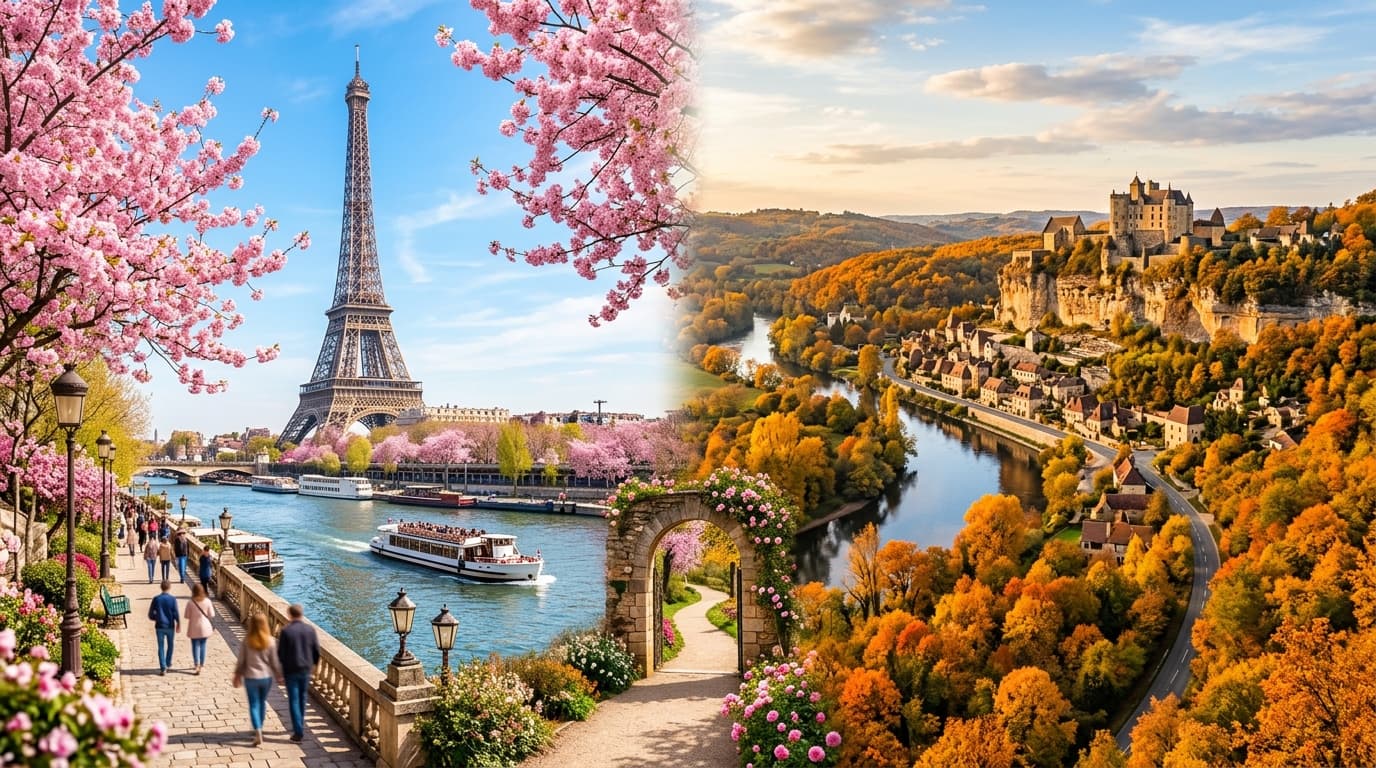
Complete month-by-month guide to visiting France. Learn best seasons, festivals, crowds, and weather to plan your perfect French getaway.