
Two Weeks in Southern France: Region by Region
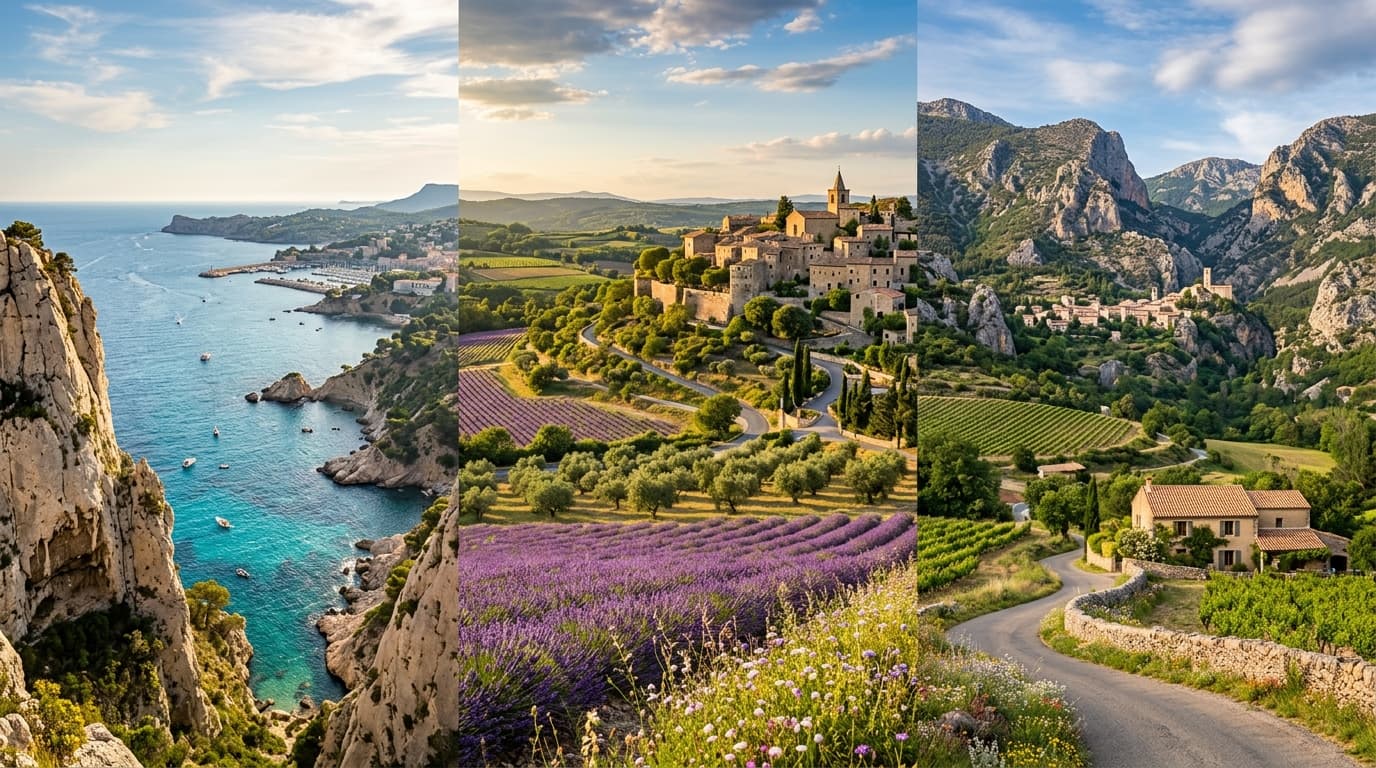
The lavender fields of Provence glow purple in July. The Mediterranean glitters along the Côte d'Azur. Medieval villages cling to cliffsides above the sea. This is Southern France—and two weeks gives you just enough time to move beyond the postcard clichés and actually live in the rhythm of these regions.
We've spent months exploring these landscapes on foot, by train, and in rented Renaults. We've eaten bouillabaisse in fishing villages and watched sunset from hilltop towns where locals outnumber tourists. This guide breaks Southern France into digestible regions, shows you where to stay, what to do, and—most importantly—who each region suits best.
Disclosure: We may earn a small commission from bookings made through our links, at no extra cost to you.
Key Takeaways at a Glance
| Question | Answer |
|---|---|
| How many regions should I visit in 14 days? | 3–4 regions maximum. Provence + Côte d'Azur is ideal; add Languedoc or Rhône Valley if you prefer slower travel. |
| Best time to visit? | May–June or September–October. July–August is hot, crowded, and expensive. |
| Do I need a car? | Not essential. Trains connect major cities; rent a car for 3–5 days to explore villages. |
| Budget per day? | €80–120 (budget), €150–250 (mid-range), €300+ (luxury). Southern France is pricier than central regions. |
| Which region has the best food? | Provence and Rhône Valley. Languedoc offers excellent value. |
| Can I do this without French? | Yes. English is spoken in tourist areas; a translation app helps elsewhere. |
1. Provence: Lavender, Markets & Medieval Hilltops
Provence isn't one town—it's a feeling. Rolling hills, stone villages, and the scent of herbs define this region. When we first drove through Provence in June, we abandoned our itinerary entirely and spent an extra day in Avignon just watching the light change on the Papal Palace.
Landscapes & Villages
Provence spans from the Rhône River east to the Alps foothills. The landscape shifts: flat plains around Avignon, then rolling vineyards, then the dramatic Mont Ventoux rising 1,912 meters.
Must-see villages:
- Avignon: Walled medieval city, Papal Palace (UNESCO site), bridge of legend. Base yourself here for 2–3 days.
- Lourmarin: Postcard-perfect hilltop village with a château, market on Friday mornings, excellent restaurants.
- Gordes: Perched on a cliff, stunning at sunrise, crowded by noon. Visit early or stay overnight.
- Bonnieux: Quieter than Gordes, excellent views, fewer tour groups.
- Isle-sur-la-Sorgue: Charming canal-side town, famous antique markets (Sundays), good base for exploring.
Activities & Experiences
Lavender fields (July–August): The famous fields around Valensole are Instagram-famous for a reason. Go in early morning or late afternoon to avoid crowds. The peak bloom is mid-July.
Markets: Provence's markets are legendary. Avignon's Saturday morning market (Halles de la Madeleine) is excellent. The Tuesday market in Lourmarin is smaller but more authentic.
Hiking: Mont Ventoux offers serious trails (6–8 hours round trip). Easier walks include the Gorges de la Nesque (2–3 hours) and trails around Lourmarin.
Wine tasting: Châteauneuf-du-Pape (south of Avignon) is the region's most famous appellation. Visit domaines like Domaine du Vieux Télégraphe for tastings. Côtes de Provence wines are lighter and more affordable.
Cycling: Provence is excellent for cycling. Rent bikes in Avignon or Lourmarin and explore the Luberon Valley. The route between Lourmarin and Bonnieux is scenic and manageable (15–20 km).
Did You Know? The Avignon Papal Palace (Palais des Papes) is the largest Gothic palace in the world. Nine popes lived here in the 14th century, making Avignon the center of the Catholic Church for 70 years.
Accommodation Options
- Budget: Chambres d'hôtes (guesthouses) in villages like Bonnieux or Lourmarin, €60–90/night.
- Mid-range: 3-star hotels in Avignon or Lourmarin, €120–180/night.
- Luxury: Converted farmhouses (mas) with pools, €250–400+/night. Look for properties around Lourmarin or Gordes.
Our pick: Stay in Avignon for 2 nights (explore the city), then move to Lourmarin for 3 nights (base for Luberon villages).
Getting There & Around
By train: Avignon is a major rail hub. Direct trains from Paris (2.5 hours), Lyon (1 hour), and Marseille (1 hour).
By car: Rent in Avignon. Roads are well-maintained; driving is straightforward. Parking in villages can be tight in summer.
Local transport: Buses connect villages, but service is infrequent. A car gives you freedom; otherwise, consider a guided tour or e-bike rental.
Who It Suits Best
Provence suits travelers who want quintessential Southern France: lavender, markets, wine, and walkable villages. It's romantic, photogenic, and popular—expect crowds in July–August. Best for: couples, food lovers, photographers, leisurely explorers.
2. Côte d'Azur (French Riviera): Glamour, Beaches & Coastal Drama
The Côte d'Azur is where the Alps meet the Mediterranean. Cliffs plunge into turquoise water. Yachts line harbors. The light is crystalline. It's expensive, yes—but there's a reason it's been captivating travelers for 150 years.
Landscapes & Towns
The Riviera stretches from Cannes to the Italian border. Terrain is dramatic: steep hills, rocky coves, and narrow coastal roads.
Key destinations:
- Nice: Largest city, pebble beach, Promenade des Anglais, Old Town (Vieux Nice). Good base with excellent transport links.
- Cannes: Film festival fame, Croisette boulevard, upscale shopping. Smaller and more glamorous than Nice.
- Antibes: Medieval old town, quieter than Cannes, excellent museums, good beaches.
- Villefranche-sur-Mer: Tiny harbor town, dramatic setting, fewer crowds than Nice.
- Menton: Easternmost town, Italian influence, lemon festival (February), quietest of the major towns.
Activities & Experiences
Beaches: The Riviera has pebble beaches, not sand. Plage de la Garoupe (Antibes) and Plage Mala (Cap d'Ail) are excellent. Bring water shoes.
Coastal hikes: The Corniche trails offer stunning views. The walk from Villefranche to Cap Ferrat (2 hours) is spectacular. The path from Menton to Roquebrune (1.5 hours) hugs the cliffs.
Old towns: Wander the narrow streets of Vieux Nice, Antibes' old town, or Menton's medieval quarter. Get lost deliberately—that's where you'll find the best cafés and local bakeries.
Water activities: Swimming, snorkeling, kayaking, and boat trips to the Îles d'Hyères are popular. Rent kayaks in Nice or Antibes for exploring coves.
Museums: Nice has excellent museums—Musée Matisse, Musée Chagall—but they're crowded. Antibes' Musée Picasso is smaller and less hectic.
Markets: Nice's Cours Saleya market (daily except Sundays) is famous but touristy. Antibes' market is smaller and more local.
Accommodation Options
The Riviera is expensive. Budget €100–150/night even for basic rooms.
- Budget: Hostels in Nice (€30–50 bed), or chambres d'hôtes in smaller towns, €80–120/night.
- Mid-range: 3-star hotels in Nice, Antibes, or Cannes, €150–250/night.
- Luxury: Beachfront hotels, €350+/night. Prices spike in July–August.
Our pick: Stay in Nice for 2 nights (transport hub, good value), then move to Antibes or Villefranche for 2–3 nights (quieter, more charming).
Getting There & Around
By train: Nice is the main hub. Trains from Marseille (2.5 hours), Lyon (4.5 hours), and Paris (5.5 hours). The coastal train (Ligne SNCF Côte d'Azur) connects Nice, Cannes, Antibes, and Menton—slow but scenic.
By car: Rental is possible but not necessary. The coastal road (N98) is beautiful but winding. Parking is expensive and difficult in summer.
Local transport: Buses and trains are efficient. A car is useful only if you want to explore inland villages (Grasse, Mougins).
Who It Suits Best
The Riviera suits travelers seeking Mediterranean glamour, beaches, and upscale dining. It's pricey and crowded in summer but stunning in May, June, or September. Best for: beach lovers, culture seekers, luxury travelers, photographers.
3. Languedoc: Wine, History & Underrated Charm
Languedoc is Southern France's secret. While tourists flock to Provence and the Riviera, Languedoc offers Roman ruins, excellent wine, medieval fortifications, and a fraction of the crowds. We spent a week here and barely scratched the surface.
Landscapes & Towns
Languedoc stretches from the Rhône River west to the Pyrenees. Terrain is diverse: coastal lagoons, rolling vineyards, and dramatic gorges.
Key destinations:
- Montpellier: Regional capital, vibrant city, excellent museums, good base. Less touristy than Nice or Avignon.
- Nîmes: Roman city (Maison Carrée, Amphitheatre), charming old town, underrated.
- Carcassonne: Fortified medieval city, dramatic hilltop setting, touristy but worth it. UNESCO site.
- Pézenas: Small medieval town, art galleries, local charm, excellent base for exploring.
- Sète: Coastal town, fishing harbor, less developed than Riviera beaches.
Activities & Experiences
Roman sites: Nîmes has exceptional Roman architecture—the Amphitheatre rivals Arles. The Maison Carrée is one of Europe's best-preserved Roman temples.
Medieval fortifications: Carcassonne's ramparts are dramatic, though crowded. Smaller fortified towns like Minerve (perched above a gorge) are less touristy.
Wine tasting: Languedoc produces excellent value wines. The region around Pézenas and Montpellier has numerous domaines offering tastings. Prices are 30–50% lower than Provence or Bordeaux.
Gorges & hiking: The Gorges de l'Hérault offers swimming holes and hiking. The walk through Minerve's gorge is spectacular (2–3 hours).
Cycling: Languedoc is excellent for cycling. The Canal du Midi (a UNESCO site) runs 240 km from Toulouse to Sète—flat, scenic, and perfect for leisurely riding.
Markets: Montpellier's Halles Castellane (daily) is excellent. Pézenas has a smaller, more local market on Tuesday mornings.
Did You Know? The Canal du Midi, built in the 17th century, is one of the oldest canals in Europe. It connects the Atlantic Ocean (via the Garonne River) to the Mediterranean—a 240 km engineering marvel.
Accommodation Options
Languedoc is significantly cheaper than Provence or the Riviera.
- Budget: Chambres d'hôtes in villages, €50–80/night.
- Mid-range: 3-star hotels in Montpellier or Nîmes, €100–160/night.
- Luxury: Converted châteaux or farmhouses, €180–300/night.
Our pick: Stay in Montpellier for 1 night (arrival), then Pézenas for 2–3 nights (explore Languedoc), then Carcassonne for 1–2 nights (medieval city).
Getting There & Around
By train: Montpellier and Nîmes are major hubs. Trains from Marseille (1.5 hours to Montpellier), Lyon (3 hours), and Paris (3.5 hours).
By car: Languedoc is best explored by car. Roads are good; distances are manageable.
Local transport: Buses connect towns; trains link major cities. Less frequent than northern France.
Who It Suits Best
Languedoc suits travelers seeking authentic Southern France without the crowds or expense. It's ideal for wine lovers, history buffs, and those wanting to slow down. Best for: budget-conscious travelers, wine enthusiasts, history lovers, cyclists.
4. Rhône Valley: Gastronomy, Wine & Urban Sophistication
The Rhône Valley is France's gastronomic heartland. Lyon, the region's capital, is considered France's food capital—and for good reason. The valley produces world-class wines (Côte-Rôtie, Condrieu, Hermitage). It's less touristy than Provence but equally rewarding.
Landscapes & Towns
The Rhône Valley stretches north–south along the Rhône River. Terrain is varied: steep vineyards on the west bank (Côte-Rôtie), flatter plains on the east.
Key destinations:
- Lyon: Second-largest French city, excellent food scene, Renaissance old town, museum-rich. Underrated compared to Paris or Marseille.
- Vienne: Smaller Roman city, excellent restaurants, good base for exploring northern Rhône wines.
- Condrieu: Tiny village, famous for white wines, scenic riverside setting.
- Tain-l'Hermitage: Wine town, famous for Hermitage reds, good base for exploring the valley.
Activities & Experiences
Food & wine: Lyon's food scene is unmatched in Southern France. Eat at a traditional bouchon (Lyonnaise restaurant)—try Chez Paul or Chez Mounier for authentic experience. Wine tastings in Vienne or Tain are excellent.
Museums: Lyon's Musée des Beaux-Arts (fine arts) and Musée de la Confluence (science) are world-class. Vienne's Musée Archéologique is smaller but exceptional.
Hiking: The Rhône Valley has excellent trails. The walk from Condrieu to Chavanay (2–3 hours) offers vineyard views and river vistas.
Roman sites: Vienne has impressive Roman temples and theaters. Less crowded than Nîmes or Arles.
Cycling: The Rhône Valley is excellent for cycling. Flat sections along the river are easy; hillside routes offer challenge and views.
Accommodation Options
Lyon is more expensive than Languedoc but cheaper than the Riviera.
- Budget: Hostels in Lyon, €30–50/bed. Chambres d'hôtes in Vienne or Condrieu, €70–100/night.
- Mid-range: 3-star hotels in Lyon, €130–200/night.
- Luxury: Converted châteaux or riverside hotels, €200–350/night.
Our pick: Stay in Lyon for 2 nights (explore the city, eat well), then Vienne or Tain for 1–2 nights (wine tasting, smaller-town charm).
Getting There & Around
By train: Lyon is a major rail hub. Trains from Paris (2 hours), Marseille (1 hour), and Nice (4.5 hours). Smaller towns (Vienne, Condrieu, Tain) are on regional train lines.
By car: Excellent for exploring the valley and visiting domaines. Roads are well-maintained.
Local transport: Trains connect major towns; buses serve smaller villages.
Who It Suits Best
The Rhône Valley suits food lovers, wine enthusiasts, and travelers seeking urban sophistication mixed with rural charm. It's less touristy than Provence but equally rewarding. Best for: foodies, wine lovers, culture seekers, those wanting a mix of city and countryside.
5. Suggested Two-Week Itineraries
The best itinerary depends on your interests, pace, and starting point. Here are three options:
Option A: Classic (Provence + Côte d'Azur)
- Days 1–3: Avignon (Provence) – explore Papal Palace, markets, day trips to Lourmarin and Gordes.
- Days 4–6: Lourmarin (Provence) – base for Luberon villages, hiking, wine tasting.
- Days 7–9: Nice (Côte d'Azur) – Promenade des Anglais, Vieux Nice, day trip to Antibes.
- Days 10–12: Antibes or Villefranche (Côte d'Azur) – beaches, coastal hikes, museums.
- Days 13–14: Menton (Côte d'Azur) – quiet coastal town, Italian influence, relax before departure.
Best for: First-time visitors, those wanting iconic Southern France, beach lovers.
Option B: Foodie & Wine (Rhône Valley + Languedoc + Provence)
- Days 1–2: Lyon (Rhône Valley) – food scene, museums, bouchons.
- Days 3–4: Vienne (Rhône Valley) – Roman sites, wine tasting, restaurants.
- Days 5–7: Montpellier (Languedoc) – city exploration, wine tasting, markets.
- Days 8–10: Pézenas (Languedoc) – medieval town, domaine visits, local charm.
- Days 11–14: Avignon (Provence) – Papal Palace, markets, day trips to Lourmarin.
Best for: Food lovers, wine enthusiasts, budget-conscious travelers.
Option C: Off-the-Beaten-Path (Languedoc + Rhône Valley)
- Days 1–2: Montpellier (Languedoc) – city, museums, markets.
- Days 3–5: Pézenas (Languedoc) – medieval town, wine tasting, gorges hiking.
- Days 6–7: Carcassonne (Languedoc) – fortified city, ramparts, medieval charm.
- Days 8–10: Tain-l'Hermitage (Rhône Valley) – wine tasting, hiking, small-town pace.
- Days 11–14: Vienne (Rhône Valley) – Roman sites, food, museums, relaxation.
Best for: Travelers avoiding crowds, wine lovers, history buffs, those with more time.
6. Transportation Between Regions
Getting between regions is straightforward. Here's how:
Avignon to Nice:
- Train: 4.5 hours (direct SNCF).
- Car: 4 hours via A7/A8 (toll road, ~€25).
Montpellier to Avignon:
- Train: 1.5 hours (direct).
- Car: 1.5 hours via A9 (toll, ~€12).
Lyon to Avignon:
- Train: 1 hour (direct).
- Car: 1 hour via A7 (toll, ~€8).
Languedoc to Rhône Valley (Montpellier to Lyon):
- Train: 2.5 hours (direct).
- Car: 2.5 hours via A9/A7 (toll, ~€20).
Tip: Book train tickets in advance (SNCF.com) for better prices. Car rentals are cheapest at major cities (Nice, Marseille, Lyon, Montpellier).
7. Practical Information & Planning
Visa & Documentation
Check our France Visa Guide for requirements. EU/EEA citizens don't need a visa. US, Canadian, and Australian citizens get 90 days visa-free.
Money & Costs
- Budget: €80–120/day (hostels, street food, free attractions).
- Mid-range: €150–250/day (3-star hotels, restaurants, paid attractions).
- Luxury: €300+/day (4-star hotels, fine dining, private tours).
Southern France is 20–30% more expensive than central regions. Accommodation is the largest cost.
Best Time to Visit
- May–June: Ideal. Weather is warm, lavender is blooming, crowds are manageable.
- September–October: Excellent. Summer heat has passed, crowds thin, wine harvest season.
- July–August: Hot (30–35°C), crowded, expensive. Avoid if possible.
- November–April: Quieter, cheaper, but cooler and rainy. Some attractions have reduced hours.
Language
English is spoken in tourist areas and hotels. In villages, a translation app helps. Learning basic French phrases (bonjour, s'il vous plaît, merci) is appreciated.
For more practical information, see our comprehensive guide.
8. Food & Drink Highlights
Southern France's food is exceptional. Here's what to eat:
Provence: Bouillabaisse (fish stew), ratatouille, salade niçoise, fresh vegetables, rosé wine.
Côte d'Azur: Seafood (sea urchins, mussels), pissaladière (anchovy tart), socca (chickpea pancake), local fish.
Languedoc: Cassoulet (bean stew), duck confit, fresh seafood, excellent value wines.
Rhône Valley: Quenelles (fish dumplings), saucisson (cured sausage), local cheeses, world-class wines.
For detailed recommendations, see our French Food Guide and French Drinks Guide.
9. Regional Comparison Table
| Factor | Provence | Côte d'Azur | Languedoc | Rhône Valley |
|---|---|---|---|---|
| Crowds | High (summer) | Very high | Low–Medium | Medium |
| Cost | €€ | €€€ | € | €€ |
| Best for | Lavender, markets, wine | Beaches, glamour | Wine, history, value | Food, wine, culture |
| Landscapes | Rolling hills, plains | Cliffs, sea | Gorges, vineyards | River valley, vineyards |
| Top activity | Village exploration | Swimming, hiking | Wine tasting | Dining, museums |
| Accommodation | €80–180/night | €100–250/night | €50–150/night | €70–200/night |
| Best season | May–June, Sept–Oct | May–June, Sept–Oct | Year-round | Year-round |
10. Frequently Asked Questions
How many days should I spend in each region? Minimum 2–3 days per region to avoid constant moving. If you have 14 days, spend 3–4 days in 3–4 regions rather than rushing through 6 regions.
Is it better to rent a car or use trains? Trains are excellent for major cities; rent a car for 3–5 days to explore villages. Many travelers do both: train between cities, car for countryside exploration.
What's the best region for first-time visitors? Provence + Côte d'Azur. They're iconic, well-developed for tourism, and offer variety (villages, beaches, culture, food).
Can I visit all four regions in 14 days? Technically yes, but you'll spend 2–3 days traveling and packing. Better to focus on 3 regions and explore deeply.
Is Southern France expensive? Compared to central France, yes. Compared to Paris or major cities, it's reasonable. Budget €150–250/day for mid-range travel.
What should I pack? Comfortable walking shoes, sun protection, light layers (evenings cool down), swimsuit, and a small daypack. In summer, bring light, breathable clothing.
Do I need to speak French? No. English is spoken in tourist areas. A translation app and basic phrases help in villages.
Conclusion: Your Southern France Adventure Awaits
Southern France isn't a single destination—it's a collection of distinct regions, each with its own character. Provence offers lavender and markets. The Côte d'Azur delivers Mediterranean glamour. Languedoc provides wine and history without the crowds. The Rhône Valley serves up gastronomy and sophistication.
Two weeks is enough time to move beyond the surface and actually experience Southern France. You'll eat well, drink better wine, walk through medieval villages, and understand why this region has captivated travelers for centuries.
Start with our Regions Overview to explore other areas of France, or dive deeper into specific cities like Marseille or Toulouse. And when you're ready to book, use our practical information guide to handle visas, transportation, and logistics.
Ready to plan your Southern France adventure? Start with your preferred region, book accommodation early (especially May–June and September–October), and leave room for spontaneity. The best travel moments happen when you wander off the planned route.
À bientôt!
Have you explored Southern France? Share your favorite region or hidden gem in the comments below.
Sources & References
Cet article est base sur une experience directe et verifie avec les sources officielles suivantes:

Go2France Team
Base en France depuis 2020 | 13 regions visitees | Mis a jour mensuellement
Nous sommes une equipe de redacteurs de voyage et de passionnes de la France qui explorent le pays toute l'annee. Nos guides sont bases sur l'experience directe, les connaissances locales et des sources officielles verifiees.
En savoir plus sur nous →A lire aussi
Lavender Fields of Provence: When and Where to Visit
Discover when to visit Provence's lavender fields, where to find them, and how to experience them like a local. Complete guide with operators and practical tips.

Most Romantic Destinations in France for Couples
Discover the most romantic destinations in France for couples, from Paris to Provence villages, the French Riviera, Annecy, and Alsace's fairy-tale towns.
Provence Road Trip: The Ultimate Itinerary Through Southern France
Plan the perfect Provence road trip with our day-by-day itinerary covering lavender fields, hilltop villages, Roman ruins, and Mediterranean coast.
Provence Lavender Season: When and Where to See the Purple Fields
Plan your visit to Provence's stunning lavender fields with our guide to timing, locations, driving routes, and the best villages to visit.