
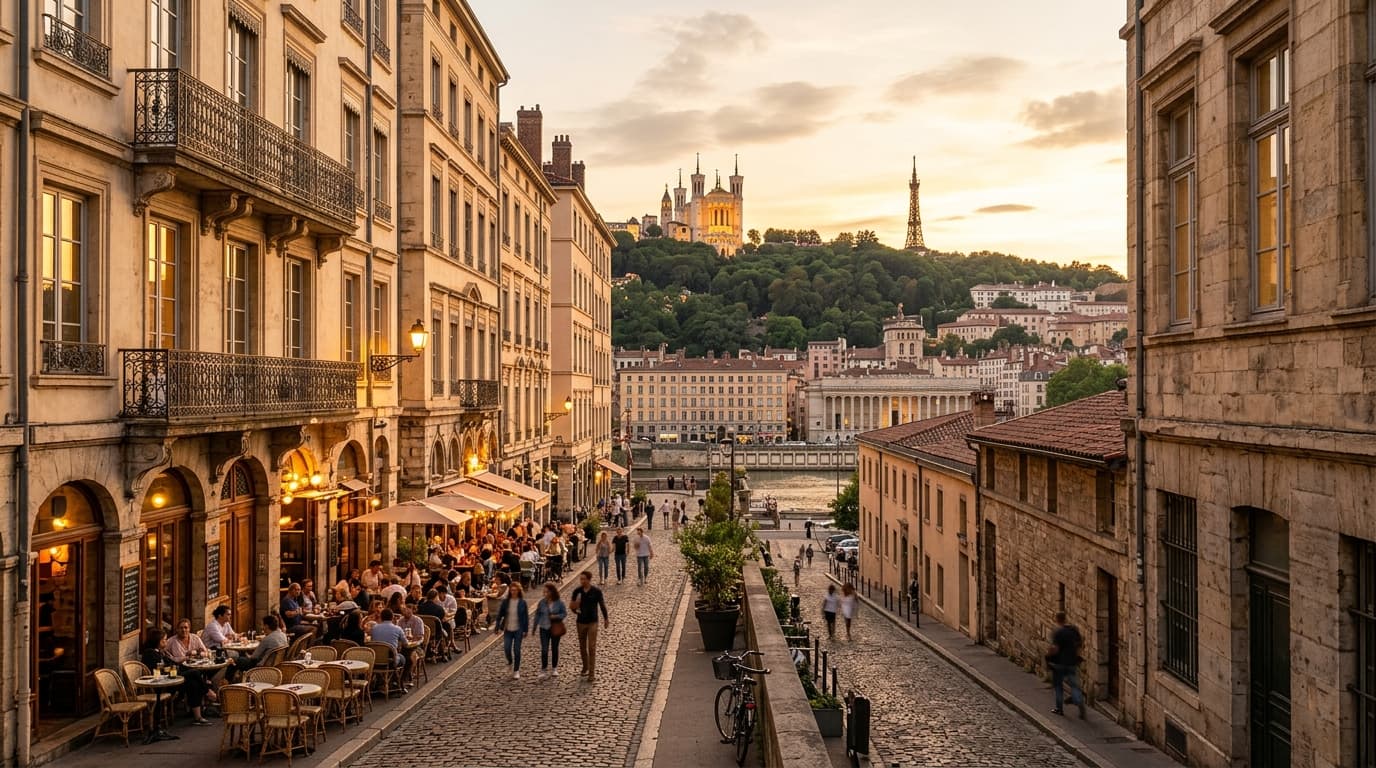
Lyon Beyond Gastronomy: A Local's Guide to the City
When most travelers think of Lyon, they think of quenelles, bouchons, and three-star Michelin restaurants. But after spending considerable time navigating this Renaissance gem at the confluence of the Rhône and Saône rivers, we've discovered that Lyon is far more than a gastronomic pilgrimage. It's a city of silk weavers' traboules (hidden passageways), world-class museums, vibrant neighborhoods, and a local culture that rewards curiosity over guidebook ticking.
This is the Lyon that locals actually live in—and it's worth far more than a weekend food tour.
Key Takeaways at a Glance
| Question | Answer |
|---|---|
| Best time to visit? | April–May or September–October for mild weather and fewer crowds |
| How many days needed? | 2–3 days minimum to experience neighborhoods and culture beyond food |
| Which arrondissements matter? | Vieux Lyon (Old Town), Presqu'île (downtown), and Croix-Rousse for authentic local life |
| Is Lyon expensive? | More affordable than Paris; budget €50–80/day for food, €60–120 for mid-range hotels |
| Can you skip the restaurants? | Absolutely—museums, parks, and street culture offer equal value |
| How to get around? | TCL metro/tram system is efficient; walking between quarters is rewarding |
| What's overrated? | Tourist-trap bouchons in Vieux Lyon; seek neighborhood gems instead |
1. Understanding Lyon's Neighborhoods: Where Locals Actually Spend Time
Lyon isn't a single cohesive city—it's a collection of distinct quartiers, each with its own character. Understanding these neighborhoods is essential to moving beyond the tourist trail.
Vieux Lyon (Old Town): Renaissance Beauty with Caveats
Vieux Lyon, nestled between the Saône River and the basilica-crowned Fourvière hill, is undeniably stunning. Narrow Renaissance streets, traboules (covered passageways unique to Lyon), and 16th-century architecture create an almost theatrical atmosphere. However, this is also where most tourists congregate, and restaurant prices reflect that reality.
What we love: The traboules themselves. These hidden corridors—originally built so silk workers could move between workshops without exposing their delicate fabrics to weather—are architectural marvels. We recommend exploring them on foot without a guide; the discovery feels more authentic. The Musée Gadagne (housed in two Renaissance palaces) offers genuine insight into Lyon's history and puppet traditions, with admission around €7.
What to skip: The heavily touristed bouchons on Rue Saint-Jean. Locals eat elsewhere.
Presqu'île (Downtown): The Real Lyon
The Presqu'île—literally "peninsula," the area between the two rivers—is where Lyonnais actually live and work. This is where you'll find Place Bellecour (one of Europe's largest squares), the opera house, and neighborhoods like Cordeliers and Jacobins that pulse with daily life.
When we visited in November, we spent an entire afternoon in the Cordeliers quarter simply sitting in cafés, watching locals navigate their routines. The energy here is fundamentally different from Vieux Lyon—less performative, more genuine. The shopping is excellent too; Rue de la République offers everything from high street to independent boutiques.
Croix-Rousse: The Soul of Working-Class Lyon
Croix-Rousse sits on a steep hillside north of the Presqu'île and was historically the heart of Lyon's silk-weaving industry. Today, it's a bohemian neighborhood with steep staircases, street art, vintage shops, and a strong sense of community. This is where you'll find the real Lyon—young professionals, artists, and families who chose this neighborhood for its character, not its tourist appeal.
The neighborhood's traboules are less famous than those in Vieux Lyon, which means you'll encounter fewer tourists. The Basilique Notre-Dame de Fourvière sits at the top of the hill; the walk up is steep but rewarding, and the views across Lyon are exceptional.
Confluence: Modern Lyon
The Confluence district, on the southern bank of the Saône, represents Lyon's 21st-century ambitions. The Musée Confluence (a striking contemporary museum) is worth a visit if you're interested in natural history and anthropology. However, this neighborhood lacks the character of older quarters and feels somewhat disconnected from Lyon's soul.
2. Museums and Cultural Institutions: Beyond the Obvious
Lyon punches above its weight in terms of cultural offerings. While the city is famous for gastronomy, its museums deserve equal attention.
Musée des Beaux-Arts (Fine Arts Museum)
Located in the Presqu'île on Place Bellecour, the Musée des Beaux-Arts houses an impressive collection spanning Egyptian antiquities to contemporary art. The museum occupies a former Benedictine convent and is beautifully curated. Admission is approximately €8 for adults, and the collection includes works by Rembrandt, Delacroix, and Monet.
What impressed us most: the Egyptian collection (one of France's finest outside Paris) and the thoughtful layout that doesn't feel overwhelming. Many visitors skip this in favor of restaurants, which is a genuine loss.
Musée Lumière (Cinema Museum)
Lyon is the birthplace of cinema—the Lumière brothers invented the cinematograph here in 1895. The Musée Lumière, housed in their former mansion, is a beautifully intimate museum dedicated to early cinema history. Admission is around €9, and the collection includes original cameras, film reels, and interactive exhibits.
This museum captures something essential about Lyon's innovative spirit that gets lost in food-focused narratives. The mansion itself, with its period rooms and gardens, is worth the visit alone.
Musée de l'Imprimerie et de la Communication (Printing and Communication Museum)
Housed in a Renaissance palace, this museum explores Lyon's role in printing history and communication. It's small but fascinating, particularly for anyone interested in typography or the history of information technology. Admission is modest (around €6), and it rarely feels crowded.
Musée Gadagne
We mentioned this briefly earlier, but it deserves deeper attention. Housed in two connected Renaissance palaces in Vieux Lyon, the Musée Gadagne actually comprises two museums: one dedicated to Lyon's history, the other to puppet traditions (Lyon has a strong puppet theater heritage). Combined admission is around €7, and the views from the upper floors across Vieux Lyon are exceptional.
3. The Traboules: Lyon's Secret Architecture
The traboules are perhaps Lyon's most distinctive architectural feature, yet many visitors pass through the city without understanding them. These covered passageways—some connecting entire city blocks—were built primarily during the Renaissance to allow silk workers to move between workshops without exposing their materials to weather.
Why they matter: Traboules represent a practical solution to a specific problem, but they've become something more—they're repositories of local history, hidden courtyards, and unexpected beauty. Walking through them feels like moving through the city's hidden nervous system.
Where to find them:
- Vieux Lyon: 27 Rue Saint-Jean leads to a spectacular traboule with a Renaissance staircase
- Croix-Rousse: The traboules here are less touristed; try 9 Quai Saint-Vincent or explore the staircases on Rue Imbert-Colomès
- Presqu'île: Several traboules connect Rue de la République to parallel streets
Rather than following a prescribed "traboule tour," we recommend simply walking with a map and ducking through doorways marked "passage privé" (private passage). Most are technically private but historically tolerated for public passage. This exploratory approach yields better discoveries than any guided experience.
Comparison: Tourist vs. Local Lyon Experience
| Aspect | Tourist Approach | Local Approach |
|---|---|---|
| Food | Michelin-starred restaurants, bouchons on Rue Saint-Jean | Neighborhood bistros, market-based meals, casual bouchons in Croix-Rousse |
| Sightseeing | Fourvière Basilica, Vieux Lyon streets, major museums | Traboules exploration, neighborhood walks, smaller museums |
| Accommodation | Hotels in Vieux Lyon or Presqu'île center | Airbnb in Croix-Rousse or Cordeliers for neighborhood immersion |
| Transportation | Taxis, walking main streets | TCL metro/tram, walking between quarters |
| Time Spent | 1–2 days | 3–5 days minimum |
| Budget | €100–200+ daily | €60–100 daily |
4. Parks, Rivers, and Green Spaces: Lyon's Natural Side
Lyon's location at the confluence of two major rivers means water and greenery are never far away. This is a side of the city that rarely makes it into food-focused guides.
Parc de la Tête d'Or (Golden Head Park)
This 117-hectare urban park is one of Europe's largest and most beautiful. It wraps around a lake, includes a zoo, botanical gardens, and rowing clubs. The park is free to access and is genuinely beloved by locals—you'll see families, joggers, and couples here year-round.
The lake itself is stunning, particularly in spring when the trees are blooming. There's a small zoo (admission around €15) that's more intimate than major metropolitan zoos, and the botanical gardens are exceptional. We spent an entire afternoon here in late April, watching locals move through their routines, and felt we'd glimpsed something essential about Lyon that restaurants never reveal.
Parc de Gerland
On the eastern bank of the Saône, Parc de Gerland is less famous than Parc de la Tête d'Or but equally worth visiting. It's more of a neighborhood park—less manicured, more lived-in. The riverside walks here are particularly pleasant, and the park connects to the Confluence district if you're interested in contemporary architecture.
Riverside Walks
The Saône and Rhône riverbanks offer excellent walking routes. The Saône's western bank (between Vieux Lyon and Presqu'île) is particularly pleasant, with cafés, small beaches in summer, and a sense of escape from the urban core. We recommend walking from Vieux Lyon north toward Croix-Rousse along the Saône—it's a route locals use regularly but tourists rarely discover.
5. Shopping and Markets: Where Locals Actually Shop
Lyon's shopping scene extends far beyond the obvious tourist zones.
Les Halles de Lyon Paul Bocuse
Named after the legendary chef, this covered market is a sensory explosion of local produce, cheese, charcuterie, and prepared foods. It's not a tourist trap—it's where Lyonnais actually buy their groceries and lunch. Prices are reasonable (a quality sandwich and drink for €8–12), and the energy is authentic.
We recommend visiting early morning (before 10 AM) when locals are shopping, rather than midday when tour groups arrive. The vendors are friendly and happy to explain their products.
Rue de la République
This long, tree-lined street is Lyon's main shopping thoroughfare. It's not as exclusive as Paris's Champs-Élysées, but it offers a genuine mix of high street brands, independent boutiques, and cafés. The street has excellent bones—it's wide, pleasant to walk, and genuinely used by locals rather than purely tourist-oriented.
Vintage and Independent Shops in Croix-Rousse
If you're interested in vintage clothing, vinyl records, or independent design, Croix-Rousse is where to explore. Rue Imbert-Colomès and the surrounding streets have numerous small shops that reflect the neighborhood's bohemian character. These aren't curated for tourists; they're genuine neighborhood businesses.
Sunday Markets
Lyon has several neighborhood markets that operate on weekends. The Quai Saint-Antoine market (Sundays, along the Saône) is particularly good for local produce and flowers. These markets are where you'll see locals actually shopping, not performing tourism.
6. Where to Stay: Neighborhoods Over Hotels
Your choice of accommodation fundamentally shapes your Lyon experience.
Vieux Lyon: Convenient but Touristy
Hotels in Vieux Lyon offer proximity to major sights and restaurants, but you'll pay a premium (€80–150 for mid-range options) and spend your evenings surrounded by other tourists. The neighborhood is beautiful but can feel like a stage set after dark.
Presqu'île (Cordeliers, Jacobins): Best Balance
The Presqu'île offers the best balance of accessibility and authenticity. Hotels here (€70–120 for mid-range) put you near museums, shopping, and excellent local restaurants. The Cordeliers and Jacobins neighborhoods feel genuinely lived-in while remaining walkable to major sights.
Our recommendation: Look for hotels or Airbnbs in the Cordeliers quarter, between Place Bellecour and Rue de la République. You'll be in the heart of local Lyon while remaining close to everything tourists want to see.
Croix-Rousse: For Neighborhood Immersion
If you want to experience Lyon as locals do, stay in Croix-Rousse. Accommodation here is slightly cheaper (€60–100) and puts you in a neighborhood with genuine character. You'll be further from Vieux Lyon (a 15-minute walk or short tram ride), but you'll gain authentic neighborhood experience.
The trade-off: fewer English speakers among locals, fewer tourist-oriented services, but genuine Lyon.
Confluence: Skip It
Unless you have a specific reason to stay in the Confluence district, skip it. It's modern and functional but lacks character and feels disconnected from the city's soul.
7. Food Beyond the Three-Star Restaurants
Yes, Lyon has exceptional restaurants. But eating well here doesn't require Michelin stars or advance reservations months in advance.
Neighborhood Bouchons
Bouchons are traditional Lyonnaise bistros, and they exist throughout the city. The famous ones in Vieux Lyon are expensive and touristy (€35–50 per person). But neighborhood bouchons in Croix-Rousse, Cordeliers, and other quarters offer authentic food at reasonable prices (€18–28).
Look for places like Chez Paul or similar neighborhood institutions. Ask your hotel concierge for recommendations in your neighborhood rather than relying on guidebooks.
Market-Based Eating
Les Halles de Lyon Paul Bocuse offers prepared foods, cheese, and charcuterie. You can assemble an exceptional lunch for €12–18. This is how locals eat when they're not cooking at home.
Café Culture
Lyonnais café culture is underrated. Sitting with a coffee and pastry at a neighborhood café, watching locals pass by, is as much a part of the experience as any restaurant meal. Expect to pay €2–4 for coffee and €3–5 for pastries.
We spent a morning at a small café in Cordeliers, reading and observing, and felt we understood Lyon better than after several restaurant meals.
Street Food and Quick Eats
Lyon has excellent street food culture. Crêpe stands, sandwich shops, and small vendors offer quality food at low prices (€5–10). The quality is generally high because locals eat this food regularly.
8. Day Trips and Nearby Attractions
Lyon's location makes it an excellent base for exploring surrounding regions.
Fourvière Basilica and Viewpoint
While technically within Lyon, the Basilica Notre-Dame de Fourvière deserves dedicated time. The walk up from Vieux Lyon is steep (or take the funicular for €3 return), but the views across the city are exceptional. The basilica itself is ornate and impressive, though admission is free (donations encouraged).
Confluence Museum
We mentioned this earlier, but it's worth a dedicated visit. The building itself—designed by Coop Himmelb(l)au—is architecturally striking. The collections focus on natural history and anthropology. Admission is around €9.
Parc de la Tête d'Or Extensions
The park's botanical gardens and zoo can easily consume 2–3 hours. The zoo admission (€15) is reasonable, and the gardens are free with park access.
Nearby Wine Regions
Lyon sits near several wine regions, including Côtes du Rhône and Beaujolais. Day trips to these regions are possible but require planning. Consider a guided tour or rental car if you want to visit wineries.
9. Practical Information: Getting Around and Logistics
Transportation
TCL (Transports en Commun Lyonnais): Lyon's public transit system is efficient and user-friendly. A single ticket costs €2.20, a 10-ticket carnet (booklet) is €16.50, and a day pass is €6.80. The metro, tram, and bus network covers the entire city well.
Walking: Lyon is very walkable. The distance from Vieux Lyon to Presqu'île is about 20 minutes on foot. Croix-Rousse is steeper but manageable.
Taxis: Available but expensive compared to public transit. Use them for late-night returns or luggage transport.
Best Time to Visit
April–May and September–October offer mild weather (15–20°C) and fewer crowds than summer. July and August are hot (25–28°C) and crowded. Winter (November–February) is cool (5–10°C) but atmospheric, with fewer tourists.
We visited in late April and found it ideal—spring weather, blossoming parks, and manageable crowds.
Language
English is spoken in tourist areas but less common in neighborhood restaurants and shops. Learning basic French phrases (hello, thank you, excuse me) is appreciated and opens doors.
Currency and Costs
France uses the Euro (€). Budget €50–80 daily for food (if eating at neighborhood restaurants and markets), €60–120 for mid-range hotels, and €20–30 for attractions. Lyon is notably cheaper than Paris.
Internet and Communication
Most hotels and cafés offer free WiFi. Consider an eSIM or local SIM card for mobile data if you're staying several days.
10. One-Day and Three-Day Itineraries
One-Day Itinerary: Essential Lyon
Morning (8:00–12:00)
- Breakfast at a neighborhood café (Presqu'île or Cordeliers)
- Walk through traboules in Vieux Lyon (27 Rue Saint-Jean is essential)
- Visit Musée Gadagne (1.5 hours, €7)
Lunch (12:00–14:00)
- Market lunch at Les Halles de Lyon Paul Bocuse or neighborhood bistro
Afternoon (14:00–18:00)
- Walk to Parc de la Tête d'Or, explore the lake and gardens
- Optional: Visit Musée des Beaux-Arts (1.5 hours, €8)
Evening (18:00+)
- Aperitif at a café on Place Bellecour
- Dinner at a neighborhood bouchon (not Vieux Lyon)
Distance covered: ~8 km (mostly walking)
Three-Day Itinerary: Local Lyon Experience
Day 1: Vieux Lyon and Presqu'île
- Morning: Traboules exploration, Musée Gadagne
- Lunch: Les Halles de Lyon Paul Bocuse
- Afternoon: Musée des Beaux-Arts, walk Rue de la République
- Evening: Dinner in Cordeliers quarter
Day 2: Croix-Rousse and Fourvière
- Morning: Walk up to Fourvière Basilica (via funicular or on foot), explore the basilica and viewpoint
- Lunch: Neighborhood café or small bistro in Croix-Rousse
- Afternoon: Explore Croix-Rousse traboules, vintage shops on Rue Imbert-Colomès
- Evening: Aperitif at a Croix-Rousse café, dinner in the neighborhood
Day 3: Parks, Museums, and Neighborhoods
- Morning: Parc de la Tête d'Or, botanical gardens, optional zoo
- Lunch: Picnic in the park or café nearby
- Afternoon: Musée Lumière (1.5 hours, €9) or Musée de l'Imprimerie (1 hour, €6)
- Evening: Final walk along the Saône, dinner at a favorite restaurant from earlier days
Total distance: ~15–18 km (mix of walking and public transit)
Estimated costs (per person):
- Accommodation: €60–100/night × 3 = €180–300
- Food: €50–70/day × 3 = €150–210
- Attractions: €30–35 total
- Total: €360–545
Frequently Asked Questions
How many days should I spend in Lyon?
Two days is the minimum to experience the city beyond restaurants. Three days allows you to explore neighborhoods, museums, and parks without rushing. Four or five days lets you take day trips to nearby wine regions or simply live like a local.
Is Lyon worth visiting if I'm not interested in fine dining?
Absolutely. While Lyon's culinary reputation is deserved, the city offers exceptional museums, architecture, parks, and neighborhood culture. Food is one dimension of Lyon, not its entirety.
What's the best neighborhood for first-time visitors?
The Presqu'île (specifically Cordeliers or Jacobins) offers the best balance of accessibility and authenticity. You're close to major sights and museums while remaining in genuinely lived-in neighborhoods.
Are the traboules worth the effort to find?
Yes. They're architecturally unique to Lyon and offer insight into the city's history and character. Finding them yourself (rather than on a guided tour) makes the experience more rewarding.
Can I visit Lyon as a day trip from Paris?
Technically yes—trains run regularly between Paris and Lyon (2 hours), and you could see major sights in 6–8 hours. However, you'd miss the neighborhood exploration and slower pace that makes Lyon special. We recommend at least an overnight stay.
What's the best time to visit Lyon?
April–May and September–October offer ideal weather and manageable crowds. July–August is hot and crowded. Winter is cool but atmospheric and least touristy.
Do I need to speak French in Lyon?
English is spoken in tourist areas, but French is helpful in neighborhood restaurants and shops. Learning basic phrases is appreciated and enhances your experience.
Final Thoughts: The Lyon Beyond the Guidebook
Lyon rewards curiosity and patience. The city doesn't reveal itself to travelers rushing between restaurants and major sights. It opens up when you wander traboules without a map, sit in neighborhood cafés without an agenda, and explore parks where locals actually spend their time.
We came to Lyon expecting gastronomy and left with something deeper—an understanding of a city that balances historical significance with contemporary vitality, that honors its silk-weaving past while embracing modern art and design, and that welcomes visitors willing to move beyond the obvious.
The three-star restaurants will still be there if you want them. But the real Lyon—the one locals know and love—exists in the neighborhoods, the hidden passageways, the parks, and the everyday moments between tourist attractions.
Ready to experience Lyon like a local? Start by booking accommodation in Croix-Rousse or Cordeliers, skip the famous bouchons, and give yourself time to get lost in the traboules. You'll discover a city far richer than any guidebook suggests.
For more French city guides, explore our comprehensive city travel guides or dive deeper into French food culture beyond Lyon's famous restaurants.
Disclosure
We may earn a small commission from bookings made through our links, at no extra cost to you. Our editorial policy ensures all recommendations are based on genuine experience and research. Learn more about how we research our guides.
Sources & References
Cet article est base sur une experience directe et verifie avec les sources officielles suivantes:

Go2France Team
Base en France depuis 2020 | 13 regions visitees | Mis a jour mensuellement
Nous sommes une equipe de redacteurs de voyage et de passionnes de la France qui explorent le pays toute l'annee. Nos guides sont bases sur l'experience directe, les connaissances locales et des sources officielles verifiees.
En savoir plus sur nous →A lire aussi
France eSIM and Internet Guide for Travelers
Complete guide to eSIM, SIM cards, and WiFi in France. Prices, setup steps, and coverage maps for staying connected while traveling.
Paris First-Time Guide: The Essential Visitor's Handbook for 2026
Your complete first-time guide to Paris with insider tips on top sights, neighborhoods, transport, food, budgeting, and avoiding tourist traps.
Paris First-Timer Guide: Everything You Need to Know for Your First Visit
Your complete first-time guide to Paris covering top sights, neighborhoods, food, transport, budgeting, and insider tips for an unforgettable visit.

France in Peak Season vs Low Season: Honest Comparison
Peak vs low season in France: costs, crowds, weather, and festivals. Plan smarter with honest trade-offs for each season.