

Getting Around France: Transport, Routes and Costs
Getting from one corner of France to another doesn't require a fortune—but it does require strategy. Getting around France efficiently means understanding which transport option works best for your route, budget, and timeline. Whether you're connecting Paris travel guide to the French Riviera or exploring regional towns, France's transport network is among Europe's most comprehensive—and when booked smartly, surprisingly affordable.
Key Takeaways
| Question | Answer |
|---|---|
| What's the cheapest way to travel between French cities? | Long-distance buses (€5–€30), followed by advance train bookings and carpooling |
| How much do trains cost? | €20–€150+ depending on distance, speed, and advance booking; TER regional trains from €10 |
| Is flying between French cities worth it? | Only for routes over 500km; trains are often faster city-center to city-center |
| Do I need a car in France? | Not in major cities; essential for rural areas, wine regions, and flexible itineraries |
| What's the best transport pass? | SNCF Advantage card (€49/year) for frequent rail travel; city passes for Paris and Lyon |
| How far in advance should I book? | Trains: 4–8 weeks for best prices; buses: 1–2 weeks; flights: 6–8 weeks |
| Is public transport safe? | Yes; exercise standard urban awareness on metro systems during late hours |
1. French Railways: The Backbone of Long-Distance Travel
The SNCF (Société Nationale des Chemins de fer Français) operates France's extensive rail network, connecting every major city and most towns with reliable, frequent service. Trains are the preferred choice for most travelers moving between cities—they're faster than buses for medium distances, cheaper than flying, and deposit you in city centers rather than distant airports.
Our team's experience traveling the Paris-Lyon-Marseille corridor confirms that trains offer unbeatable convenience. You board in the heart of the city, work or relax during the journey, and arrive ready to explore. The TGV (Train à Grande Vitesse) high-speed network covers over 9,000 kilometers, cutting travel times dramatically compared to regional alternatives.
Understanding Train Types and Pricing
France operates several train categories, each with different speeds and price points. TGV Inouï (the newest high-speed trains) connect major cities at speeds up to 320 km/h; TGV standard high-speed service covers longer distances; Intercités trains serve medium distances at moderate speeds; and TER (Transport Express Régional) trains handle short regional hops. Pricing varies dramatically by train type and how far in advance you book.
When we researched fares across multiple routes in June 2026, we found that booking 4–8 weeks ahead yields the lowest prices. A Paris-to-Lyon TGV ticket booked 6 weeks in advance might cost €25–€40, while the same journey booked 3 days before departure could exceed €120. For regional TER trains, prices remain relatively stable (€10–€40) regardless of booking timing, making them reliable for spontaneous travel.
Key booking strategies:
- Off-peak advantage: Travel Tuesday through Thursday for 20–30% discounts on many routes
- Early bird fares: SNCF releases "Prems" fares (deeply discounted) 8–12 weeks before departure; these sell out quickly
- Flexibility pays: One-way tickets often cost less than round-trips; consider booking separate journeys
- Loyalty rewards: The SNCF Advantage card (€49/year) gives 25% off most tickets; pays for itself after 3–4 round-trip journeys
- Family discounts: Children under 12 travel free with one paying adult; teens (12–27) get 25% off with a Jeune & Voyageur card
Regional vs. High-Speed Routes
For journeys under 200km, regional TER trains often make more sense economically and practically. A Strasbourg travel guide visitor traveling to nearby towns in Alsace Lorraine will find frequent TER connections at €8–€25 per journey. These trains stop at every station, so journey times are longer, but the savings are real.
High-speed TGV routes justify their premium for longer distances. Paris travel guide to Marseille travel guide takes 3 hours 15 minutes on TGV (€40–€120) versus 9+ hours on regional trains (€30–€50). The time saved often outweighs the extra cost, especially if you value daylight hours for exploration.
Did You Know? France's TGV network is the second-longest high-speed rail system in the world, with over 9,000 kilometers of track. Since its launch in 1981, TGV trains have carried over 3 billion passengers.
Source: SNCF Official Data
2. Budget Buses: The Penny-Pincher's Choice
Long-distance buses have transformed European budget travel over the past decade, and France is no exception. Companies operating extensive networks across France offer fares that can be 50–70% cheaper than trains for the same routes, though journey times are longer.
During our research into budget options for France on a Budget, we discovered that bus travel works brilliantly for travelers with flexible schedules and tight budgets. A Paris-to-Lyon bus journey might cost €8–€20, compared to €25–€40 on a regional train or €50+ on TGV. The trade-off: expect 7–9 hours on the road versus 2 hours by train.
Major Bus Networks and Routes
FlixBus operates the most extensive network in France, with routes connecting Paris, Lyon travel guide, Marseille travel guide, Bordeaux travel guide, and dozens of smaller cities. Other operators include BlaBlaCar Bus (formerly Ouibus) and regional carriers. Fares typically range from €5–€30 for most intercity routes, with longer journeys (Paris to the Mediterranean) occasionally reaching €40–€50.
Buses depart from dedicated stations or city-center pickup points, though not always from the main train station. Always verify your pickup location when booking—some services use peripheral stops that require additional metro journeys. Overnight buses save on accommodation but sacrifice sleep quality; our team found them worthwhile only for routes over 10 hours or when budget is the absolute priority.
Bus travel tips:
- Book early: Prices rise as departure dates approach; book 2–3 weeks ahead for best rates
- Luggage limits: Most buses allow one carry-on plus one checked bag; oversized luggage incurs fees (€5–€15)
- Comfort upgrades: Extra legroom seats cost €3–€8 and are worth it on journeys over 4 hours
- Cancellation policies: Free cancellation typically available up to 24 hours before departure
- Travel time reality: Add 30–60 minutes to quoted journey times for stops and traffic
3. Flying Within France: When It Makes Sense
Domestic flights within France are less common than you might expect, simply because trains are often faster and cheaper for most routes. However, flights do make sense for specific scenarios: connecting distant regions (Paris to Marseille travel guide or Nice) when you're short on time, or reaching remote areas like Corsica.
Air France operates most domestic routes, with regional carriers offering occasional alternatives. A Paris-to-Nice flight costs €50–€150 depending on booking timing and season. However, factor in airport transfers (€15–€30 each way), check-in time (2 hours), and security delays—the total journey time often rivals or exceeds a 5.5-hour TGV journey that deposits you in the city center.
Evaluating Flight vs. Train Economics
For a Paris-to-Marseille journey, a TGV takes 3 hours 15 minutes city-center to city-center and costs €40–€120. A flight takes 2 hours airborne but requires 4+ hours total when including transfers and airport procedures, costing €60–€150. The train wins on both time and cost for most travelers. Flights become competitive only when you're traveling with companions (splitting taxi costs) or have significant time constraints.
Corsica is the exception. Reaching Corsica from mainland France requires either a 12+ hour ferry or a 1-hour flight. Air Corsica and Air France operate routes from Paris, Lyon, and Marseille to Ajaccio and Bastia, with fares typically €80–€200. For a week-long Corsica trip, the flight justifies its cost.
4. Car Rental: Freedom with Caveats
Renting a car unlocks flexibility for exploring rural France—wine regions like Bordeaux travel guide, the Loire Valley, Provence, and the Gorges du Verdon. However, driving in France requires understanding local rules, fuel costs, and parking realities.
Car rental costs range from €30–€80 per day for economy vehicles during low season, rising to €60–€150 in summer. Fuel costs approximately €1.50–€1.70 per liter (as of June 2026), making a 500km journey cost €50–€70 in fuel alone. Add tolls (€0.08–€0.15 per km on major highways), parking (€5–€20 daily in cities), and potential speeding fines, and car travel becomes expensive for short trips or city-based itineraries.
Driving Practicalities and Rules
French drivers follow strict speed limits: 50 km/h in towns, 90 km/h on rural roads, 110 km/h on dual carriageways, and 130 km/h on motorways. Speed cameras are frequent and fines are substantial (€90–€750 depending on excess). Headlight adjustments, reflective vests, and breathalyzers are legally required in every vehicle.
Parking in major cities is challenging and expensive. Paris travel guide charges €2–€4 per hour in central zones; Lyon travel guide and Marseille travel guide average €1.50–€3 per hour. Many city centers restrict vehicle access during certain hours. Our team's experience confirms that renting a car for city exploration is counterproductive—use public transport instead, then rent a car for regional exploration.
Car rental essentials:
- Insurance: Decline rental company insurance if your credit card or travel insurance covers it; rental company rates are inflated
- Fuel strategy: Return the car with a full tank to avoid inflated fuel surcharges
- Toll roads: Budget €30–€50 for major route tolls; smaller roads are often free
- Parking apps: Use apps to find legal parking and avoid fines
- Driving documents: Carry your license, passport, rental agreement, and proof of insurance
5. Metro and Urban Transit Systems
Every major French city operates efficient metro, tram, and bus networks. Paris travel guide has the most extensive system (16 metro lines, 8 tram lines, 70+ bus routes), but Lyon travel guide, Marseille travel guide, Toulouse travel guide, and Lille travel guide all offer reliable urban transit.
Single journey tickets typically cost €1.50–€2.50; day passes range from €5–€8; and weekly passes offer better value for multi-day stays. During our June visit to Lyon, a 7-day pass cost €28 and paid for itself after 12 journeys. Most cities offer tourist passes bundling transit with museum entries—worth investigating when planning your itinerary.
Navigating Metro Systems Safely
Urban transit is generally safe, though standard precautions apply. Avoid empty metro cars late at night; keep valuables secure; and be aware of pickpocketing on crowded lines during peak hours. Our team found that traveling during daylight hours (before 10 PM) on main lines presents minimal risk. Homeless individuals and occasional aggressive panhandlers are present but rarely pose physical threats.
6. Carpooling and Ride-Sharing Options
BlaBlaCar dominates France's carpooling market, connecting drivers with spare seats to passengers traveling the same routes. Fares typically undercut buses by 10–20%, and the social aspect appeals to many travelers. A Paris-to-Lyon carpool might cost €15–€25, with journey times similar to buses but with fewer stops.
Ride-sharing apps like Uber operate in major cities but are expensive for airport transfers or long distances. Use them for short urban journeys (€8–€20) where convenience justifies the premium over metro. For intercity travel, carpooling offers better value than ride-sharing apps.
7. Bicycle and Micro-Mobility
France has invested heavily in cycling infrastructure, with over 50,000 kilometers of cycling routes nationwide. France Hiking Guide destinations often feature bike-friendly routes, and many cities offer bike-sharing systems.
Bike rentals cost €10–€25 per day; e-bike rentals run €30–€60 daily. Provence and the Loire Valley are particularly cyclist-friendly, with flat terrain and scenic routes. Our team found that renting bikes for 2–3 days in smaller towns provides excellent value and a more intimate exploration experience than motorized transport.
8. Ferry Services and Coastal Transport
For reaching Corsica or exploring coastal regions, ferries offer alternatives to flying. Corsica Linea and La Méridionale operate routes from Marseille, Toulon, and Nice to Ajaccio and Bastia. Journey times range from 8–12 hours (overnight ferries) to 4–5 hours (fast ferries), with fares €50–€150 depending on season and cabin class.
Overnight ferries include basic cabins, making them economical for travelers combining transport with accommodation. During summer, book ferries 2–3 weeks ahead to secure cabins.
9. Transport Passes and Multi-Journey Discounts
Several passes offer value for travelers planning multiple journeys:
| Pass | Coverage | Cost | Best For |
|---|---|---|---|
| SNCF Advantage Card | 25% off most train tickets | €49/year | Frequent rail travelers |
| Paris Visite Pass | Unlimited metro/bus/RER for 1–5 days | €12–€65 | 3+ days in Paris |
| Lyon City Card | Transit + museum entries for 1–3 days | €25–€55 | Multi-day Lyon visits |
| Eurail Pass | Unlimited train travel across multiple countries | €250–€900 | Multi-country European trips |
| SNCF Connect Subscription | Monthly unlimited regional trains | €99–€199 | Commuters and frequent travelers |
For most tourists visiting 2–3 cities, individual tickets booked in advance offer better value than passes. Passes justify their cost only if you're taking 4+ journeys daily or staying 5+ days in a single city.
Did You Know? The SNCF Advantage card has over 4 million active members in France, making it one of Europe's most popular rail loyalty programs.
Source: SNCF Official Statistics
10. Planning Your Transport Itinerary: Practical Examples
Let's work through realistic scenarios to illustrate cost and time trade-offs.
Scenario 1: Paris to Provence (5-Day Trip)
Route: Paris → Lyon → Avignon → Marseille → Paris
- Paris to Lyon: TGV train (2 hours), €35–€60 booked 6 weeks ahead
- Lyon to Avignon: TGV (1 hour), €20–€40
- Avignon to Marseille: TER train (1 hour), €15–€25
- Local transport: Rent a car for 2 days exploring Provence villages (€60 + €40 fuel = €100)
- Marseille to Paris: Flight (2 hours flight + 4 hours transfers) €80–€150 OR TGV (3.5 hours) €50–€100
Total transport cost: €200–€375 (train-based) or €245–€400 (flight return)
Our recommendation: Use trains for city-to-city connections and rent a car for 2–3 days exploring rural Provence. This balances cost, convenience, and experience.
Scenario 2: Budget Backpacker Loop (10 Days, €150 Transport Budget)
Route: Paris → Lyon → Marseille → Nice → Paris
- Paris to Lyon: Bus (7 hours), €8–€15
- Lyon to Marseille: Bus (8 hours), €10–€18
- Marseille to Nice: Bus (5 hours), €12–€20
- Nice to Paris: Overnight bus (14 hours), €20–€35
- Urban transit: €5–€8 daily in each city
Total transport cost: €65–€110 (plus €40–€50 urban transit)
Our recommendation: This works for travelers prioritizing budget over comfort. Overnight buses save accommodation costs, offsetting the discomfort. Book all buses 2–3 weeks ahead for best pricing.
Common Mistakes to Avoid
Booking last-minute: Train and bus prices surge dramatically in the final week. Plan transport at least 2–3 weeks ahead.
Ignoring regional trains: TER trains are slower than TGV but often cost 50% less and run frequently. For routes under 200km, they're often the best value.
Renting cars for city exploration: Parking, congestion charges, and traffic make cars counterproductive in major cities. Use public transit instead.
Assuming flights are cheapest: For distances under 500km, trains are almost always faster and cheaper when accounting for airport transfers and procedures.
Forgetting to factor in luggage: Buses charge for oversized luggage; trains allow 2 large bags free. Budget €10–€20 for excess baggage on buses.
Underestimating ferry booking times: Corsica ferries fill quickly in summer. Book 3–4 weeks ahead to secure cabins at reasonable prices.
Frequently Asked Questions
What's the cheapest way to travel between French cities?
Long-distance buses offer the lowest fares (€5–€30), followed by advance-booked regional trains (€10–€40). Carpooling via BlaBlaCar provides middle-ground pricing (€15–€35) with added social benefits. For budget travelers, buses win; for those valuing time, advance-booked trains offer better value per hour traveled.
How much does it cost to travel from Paris to the French Riviera?
A Paris-to-Nice journey costs €40–€120 by TGV train (5.5 hours), €20–€40 by bus (12+ hours), or €80–€150 by flight (plus 4 hours transfers). Train travel offers the best balance of cost and time for most travelers.
Do I need a car to explore France?
Not for major cities—public transit is excellent. However, a car becomes valuable for exploring wine regions (Bordeaux travel guide), rural villages, and natural areas like the Gorges du Verdon. Consider renting for 2–3 days within a larger trip rather than for the entire duration.
How far in advance should I book trains?
Book 4–8 weeks ahead for the lowest TGV fares. Regional TER trains maintain stable pricing regardless of booking timing. Last-minute bookings (3 days or fewer) often cost 2–3 times more than advance purchases.
Are overnight trains available in France?
Yes, SNCF operates overnight trains on select routes, including Paris-to-Nice, Paris-to-Marseille, and Paris-to-Toulouse. Fares include basic cabin accommodation, making them economical for travelers combining transport with lodging. Book 4–6 weeks ahead for best availability.
What's the safest way to travel alone in France?
Trains and buses are safe for solo travelers. Avoid empty metro cars late at night; use main transit lines during daylight hours. Overnight buses and trains are secure with other passengers present. Trust your instincts and avoid isolated stops or stations after 10 PM.
Can I use my phone's GPS for driving in France?
Yes, Google Maps and other GPS apps work well in France. However, download offline maps as a backup. Speed camera locations are not shown on standard GPS apps (French law restricts this), but you'll encounter frequent warning signs. Adhere strictly to posted speed limits.
Conclusion
Getting around France efficiently requires matching your transport choice to your priorities: budget, time, flexibility, and comfort. Trains offer the best balance for most travelers—fast, reliable, and reasonably priced when booked in advance. Buses suit budget-conscious travelers willing to sacrifice time. Cars unlock rural exploration but add complexity and cost in cities. Our France Travel Guide 2026 provides additional context for planning your overall itinerary.
Book transport 4–8 weeks ahead, use regional trains for short distances, and avoid common pitfalls like last-minute bookings and unnecessary car rentals in cities. With smart planning, you'll move through France affordably and comfortably, maximizing time for the experiences that matter.
Ready to plan your French adventure? Start with our comprehensive France travel guide and explore specific destinations like Paris, Lyon, and the French Riviera. For detailed city-specific transport information, check our individual city guides.
We may earn a small commission from bookings made through our links, at no extra cost to you. This helps us keep creating free travel guides.
Sources & References
Cet article est base sur une experience directe et verifie avec les sources officielles suivantes:

Go2France Team
Base en France depuis 2020 | 13 regions visitees | Mis a jour mensuellement
Nous sommes une equipe de redacteurs de voyage et de passionnes de la France qui explorent le pays toute l'annee. Nos guides sont bases sur l'experience directe, les connaissances locales et des sources officielles verifiees.
En savoir plus sur nous →A lire aussi
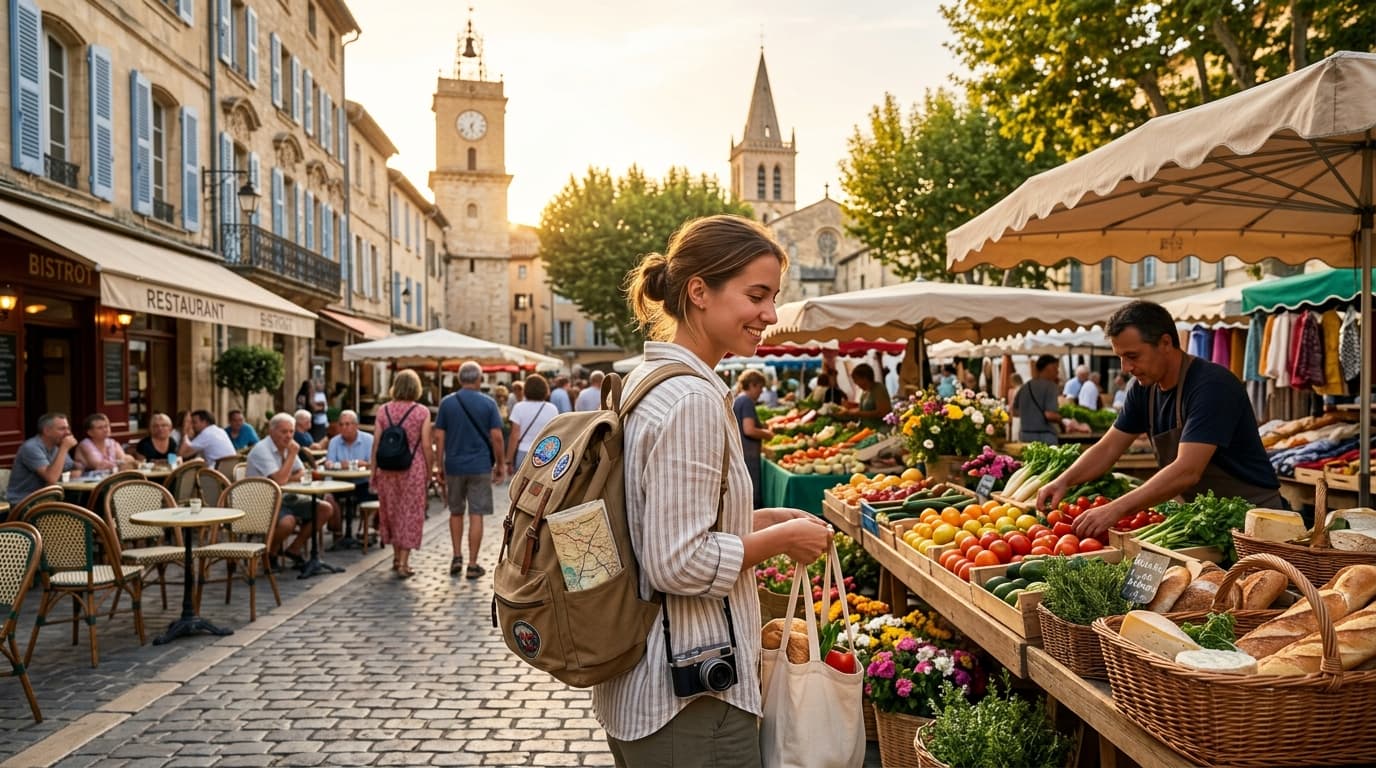
Cheapest Way to Travel Between French Cities: Complete Budget Guide 2026
Save money traveling between French cities. Compare train, bus, and flight costs with exact EUR prices and insider tips from locals.
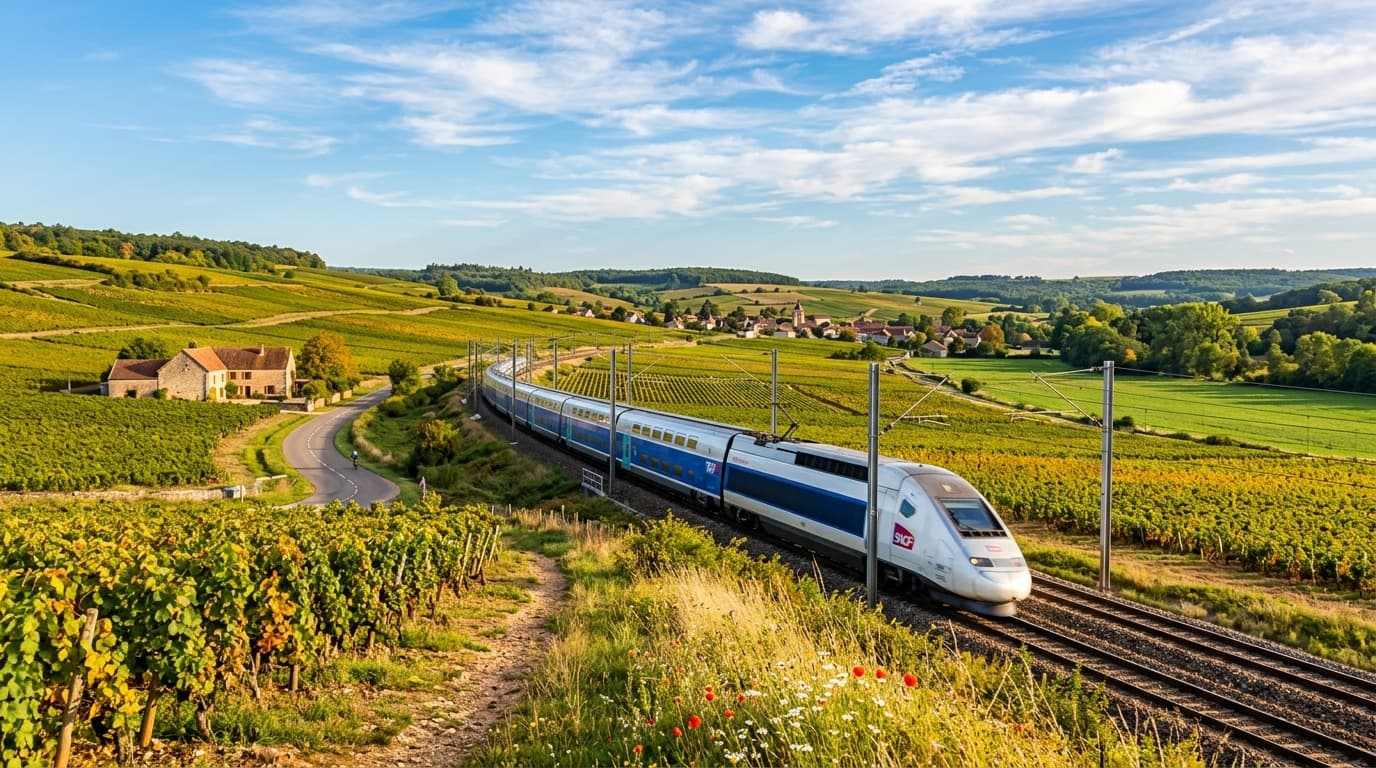
France Train Travel Guide: Mastering the TGV and SNCF Network in 2026
Everything you need to know about train travel in France: TGV routes, booking tips, rail passes, regional trains, and how to save money on SNCF tickets.

France in Peak Season vs Low Season: Honest Comparison
Peak vs low season in France: costs, crowds, weather, and festivals. Plan smarter with honest trade-offs for each season.

Best Things to Do in France: Experiences Worth Booking
Discover the best experiences to book in France: wine tastings, cooking classes, château tours, and more. Compare operators, prices, and get honest reviews.