

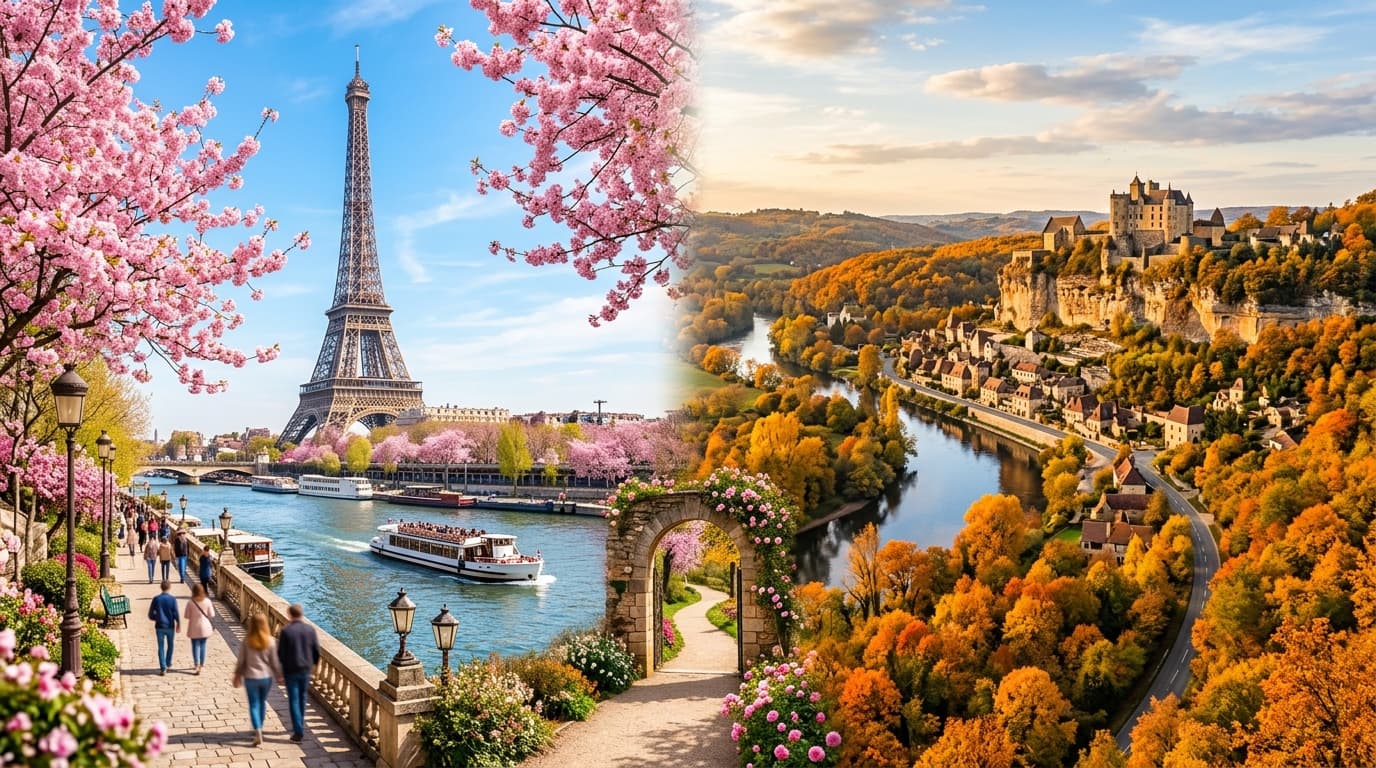
Imagine standing beneath the Eiffel Tower as cherry blossoms paint Paris in soft pinks, or hiking the lavender fields of Provence under a clear summer sky—the best time to visit France depends on your priorities, from balmy beach days to cozy winter markets. France's diverse regions offer year-round appeal, but timing your trip right can mean fewer crowds and more authentic experiences. Whether chasing festivals or serene countryside escapes, our month-by-month breakdown draws from extensive team research across the country to help you plan.
Key Takeaways
| Question | Answer |
|---|---|
| What is the best time to visit? | The best time to visit France is shoulder seasons like spring (April-June) or fall (September-October) for mild weather and fewer tourists, though summer suits beach lovers despite crowds. |
| How much does it cost? | Expect €100-200 ($110-220 USD) per day for mid-range travel including meals and transport; high season adds 20-50% to accommodation prices. |
| How do I get there? | Fly into major hubs like Paris Charles de Gaulle or Nice Côte d'Azur, then use high-speed TGV trains for inter-city travel via France Train Travel Guide. |
| Is it safe? | France is generally safe for tourists, but stay vigilant in crowded urban areas like Paris against pickpockets; rural spots feel secure year-round. |
| What should I book in advance? | Reserve high-speed trains and popular sites like the Louvre Museum tickets months ahead, especially in peak summer. |
| What's the weather like? | Varies by region—mild Mediterranean summers in the south, cooler Alps winters; check Weather for specifics. |
| Best for families? | Summer or school holidays for kid-friendly events, but avoid August heat in cities; see our France Family Travel tips. |
1. Why Timing Matters for Your France Trip
France's appeal spans all seasons, but the best time to visit France hinges on weather, events, and your travel style. Our team has crisscrossed the country from the snowy Alps to sun-drenched Riviera, noting how each month transforms destinations like Paris or Provence. Shoulder seasons often deliver the sweet spot: blooming landscapes without the summer throngs.
Regional differences amplify this—northern Normandy chills in winter while southern Côte d'Azur stays milder. Planning around these shifts ensures you catch highlights like lavender blooms or Christmas markets without overpaying.
Weather Patterns Across Regions
France's climate ranges from oceanic in the west to continental in the east, influencing everything from hikes in the Chamonix Mont Blanc to beach days on the Atlantic Coast. In Paris, summers average 20-25°C (68-77°F), while winters dip to 3-8°C (37-46°F). Southern areas like Nice enjoy Mediterranean warmth year-round, rarely below 10°C (50°F) in winter.
During our research trips, we've seen how sudden rains in Brittany can turn coastal paths muddy, underscoring the need for flexible itineraries. Always pack layers, as microclimates vary—check Météo France for real-time updates.
Festivals and Events Overview
France buzzes with cultural happenings, from wine harvests to music fests. Major events like Bastille Day on July 14 draw crowds nationwide, while regional gems like the Cannes Film Festival spotlight the Riviera. Our team timed visits to align with these, finding them enriching but logistically demanding.
Did You Know? France hosts over 1,000 festivals annually, with events like the Avignon Theatre Festival attracting 300,000 visitors each July.
Source: France.fr Activities
2. Winter in France: December to February
Winter wraps France in festive charm, ideal for cozy city breaks or alpine sports. The best time to visit France in winter suits those seeking holiday magic without summer heat, though shorter days mean planning daylight activities. Snow dusts the Alps, while Paris twinkles with lights—our team loved the mulled wine stalls during December research.
Crowds thin out post-holidays, but book ski resorts early. Costs drop 20-30% from summer, making it budget-friendly for cultural dives.
Holiday Markets and Celebrations
December's Christmas markets light up cities like Strasbourg, with mulled wine, crafts, and carols creating a fairy-tale vibe. Strasbourg's market, one of Europe's oldest, runs from late November to December 24, drawing locals and visitors alike. In Paris, the Champs-Élysées market offers gourmet treats—visit early to beat evening crowds.
New Year's Eve fireworks over the Seine are spectacular, but expect security checks. For a quieter take, head to Alsace Lorraine region guide villages where traditions feel intimate.
Market Hotspot: Strasbourg's Place Kléber for its massive tree and artisan stalls.
Pro Tip: Arrive mid-week to avoid weekend surges; pair with a Champagne House Tour nearby.
Budget Option: Free entry to most markets; splurge on €5-10 ($5.50-11 USD) hot drinks.
Skiing and Winter Sports
The Alps shine in January-February, with resorts like Chamonix offering world-class slopes. Fresh powder makes it prime for skiing, though beginners should opt for gentler runs. Our team spent a crisp February week in the Alps-Mont Blanc, marveling at Mont Blanc views after a morning glide—crowds were manageable mid-week.
Pyrenees spots provide alternatives with fewer lines. Book lifts and lessons via official sites; expect €50-100 ($55-110 USD) daily passes.
Top Resort: Chamonix for varied terrain and après-ski vibes.
Avoid Pitfall: Late February melt can close lower runs—check snow reports.
When we visited the Vosges Mountains in January, the quiet trails allowed peaceful cross-country skiing, a far cry from busier Alps hubs.
3. Spring Awakening: March to May
Spring breathes life into France, with blooming tulips and milder temps marking the best time to visit France for nature lovers. Our research across Provence revealed wildflowers carpeting hillsides by April, drawing fewer tourists than summer. Days lengthen to 12-14 hours, perfect for exploring chateaus.
Rain is possible, especially in the north, but sunshine dominates south. This shoulder season balances value and vibrancy.
Easter and Early Festivals
March brings subtle shifts, like Paris fashion weeks, but April's Easter fills churches and markets with chocolate hunts. In the Loire Valley, chateaus host egg hunts—ideal for families. Our team joined a Lyon Easter market in April, savoring seasonal pastries amid blooming gardens.
May's Labor Day (May 1) sparks nationwide picnics, though some sites close. Head to Bordeaux for wine tastings as vines bud.
Outdoor Adventures Bloom
Hiking ramps up in May, with Gorges du Verdon trails thawing for kayaking. Provence's early lavender hints tease full blooms later. During our May trek in the Dordogne Valley, mild 15-20°C (59-68°F) weather made cave visits like Lascaux comfortable, with birdsong as our soundtrack.
Cyclists love the Loire's flat paths; rent bikes for €20-30 ($22-33 USD) daily.
Prime Trail: Verdon for turquoise waters and canyons.
Gear Essential: Sturdy shoes for muddy post-rain paths.
Eco Choice: Join guided Mont Blanc Hiking to minimize impact.
Did You Know? Provence's lavender fields, a UNESCO-recognized landscape, begin blooming in late May, peaking in July across 250 km of valleys.
Source: UNESCO Biosphere Reserves
For more on spring blooms, explore our France Hiking Guide.
4. Summer Vibes: June to August
Summer is France's high season, alive with sun-soaked beaches and festivals—the quintessential best time to visit France for energy and events. Our team navigated July crowds in Côte d'Azur, finding golden-hour Riviera sunsets worth the bustle. Temps hit 25-30°C (77-86°F) nationwide, with longer days for sightseeing.
August sees a French exodus to vacations, quieting cities but packing coasts. Book everything early to secure spots.
Beach and Riviera Escapes
June kicks off with warm seas along the Atlantic Coast, where Biarritz waves lure surfers. By July, Nice Old Town buzzes with promenades and pebble beaches. We timed a June stay in Corsica, where crystal waters and hikes felt exclusive before peak rush.
August's heat pushes crowds to shaded calanques near Marseille. Daily beach fees are rare, but umbrellas cost €10-20 ($11-22 USD).
Seaside Gem: Calanques National Park for boat-access coves.
Sun Safety: Use reef-safe sunscreen; hydrate often.
Relaxed Alternative: Brittany's rugged shores over busier south.
Major Summer Festivals
Bastille Day fireworks illuminate Paris on July 14, with military parades drawing millions. The Tour de France cycles through regions in July, thrilling sports fans. In Avignon, the July theatre festival stages 40+ shows daily—our team caught an outdoor Shakespeare amid medieval walls, the energy electric despite lines.
Cannes Film Festival in May spills into summer vibes, but August's jazz in Juan-les-Pins swings. Expect €50+ ($55+ USD) for event tickets.
Festival Must: Avignon's Palais des Papes for immersive performances.
Crowd Hack: Opt for off-site viewings of fireworks.
When we explored the Pyrenees in August, high-altitude trails offered cool relief from valley heat, with wildflowers still dotting paths.
Link to Cheapest Way Travel Between French Cities for summer transport tips.
5. Fall Harvest: September to November
Autumn paints France in golden hues, often the best time to visit France for foodies and photographers. Vines turn fiery in Burgundy, and our September research in the Loire Valley captured harvest bustle without summer swelter. Temps cool to 15-20°C (59-68°F), with crisp air invigorating city walks.
Fewer tourists mean better deals, though rain increases in the north by November.
Wine Harvest and Gastronomy
September's grape harvests animate Bordeaux Wine regions, with festivals offering tastings. In Champagne, press your own bubbly during the vendange. Our team joined a Saint-Émilion harvest, feet sticky from stomping grapes—the earthy aromas unforgettable.
October's truffle hunts in Périgord pair with foie gras feasts. Book Wine Tasting Bordeaux experiences ahead.
Harvest Highlight: Loire Valley chateaus with vineyard views.
Pairing Idea: Local cheeses from French Cheese Guide.
Affordable Entry: Many free vineyard walks; tastings €15-25 ($16-27 USD).
Cultural and Foliage Spots
Paris Fashion Week in September spotlights runways, while Normandy's apple orchards yield cider. By November, remembrance tours in northern France honor WWI sites. During our October visit to the Jura Mountains, fog-shrouded forests created mystical hikes, leaves crunching underfoot.
Dordogne's prehistoric sites glow in fall light.
Did You Know? France produces 50 million hectoliters of wine yearly, with September harvests contributing to its UNESCO-listed vineyard heritage.
Source: UNESCO Vineyard Landscapes
Scenic Drive: Route des Grands Crus in Burgundy.
Weather Watch: Pack rain gear for showers.
For fall itineraries, see Itineraries.
6. Comparing Seasons: A Quick Guide
Choosing the right season boils down to your interests—here's how they stack up based on our field notes.
| Season | Best For | Cost (per day, mid-range) | Rating |
|---|---|---|---|
| Winter | Holidays, skiing | €80-150 ($88-165 USD) | ⭐⭐⭐⭐ |
| Spring | Blooms, mild hikes | €90-160 ($99-176 USD) | ⭐⭐⭐⭐⭐ |
| Summer | Beaches, festivals | €120-250 ($132-275 USD) | ⭐⭐⭐⭐ |
| Fall | Wine, foliage | €90-170 ($99-187 USD) | ⭐⭐⭐⭐⭐ |
This table highlights why shoulders edge out peaks for value. We may earn a small commission from bookings made through our links, at no extra cost to you. This helps us keep creating free travel guides.
7. Planning Tips for Any Month
No matter the best time to visit France, smart planning sidesteps pitfalls. Our team learned the hard way during a rainy August in Paris—always have indoor backups like museums. Focus on transport and bookings to smooth your journey.
Use the SNCF app for trains; high-speed links cut Paris-to-Lyon to 2 hours.
Avoiding Crowds and Tourist Traps
Peak summer lines at the Eiffel Tower can exceed 2 hours—opt for early mornings or off-peak apps. Common mistake: Over-relying on taxis in cities; metros are efficient and cheap at €2 ($2.20 USD) per ride.
In Venice-like Venice? No, but Venice-inspired canals in Annecy draw summer mobs—visit in fall instead. Be wary of overpriced souvenirs near major sites; seek local markets for authenticity.
Timing Trick: Mid-week visits to Versailles halve wait times.
Transport Save: Eurail passes for multi-city hops, detailed in Transport.
Hidden Gem: Skip Louvre lunch rushes; picnic nearby.
During our November Normandy trip, empty D-Day beaches allowed reflective walks, free from summer tours.
Booking Essentials and Budget Hacks
Accommodations fill fast for events—book 3-6 months out via trusted sites. Flights to regional airports like Bordeaux save over Paris hubs.
For connectivity, grab an eSIM before arrival; see Esim. Budget tip: Eat like locals with €15 ($16.50 USD) market lunches.
Don't forget Travel Insurance for peace of mind. Link to France On A Budget for more.
8. Regional Variations and Custom Itineraries
France's 13 regions mean no one-size-fits-all for the best time to visit France. Southern Provence thrives in summer heat, while northern Brittany prefers dry springs. Our extensive mapping via Destinations shows how to tailor trips.
For romance, fall in Loire Valley; families favor summer Calanques National Park.
Tailoring to Your Interests
Food lovers: Align with fall harvests in Occitanie. Adventure seekers: Winter Alps or summer kayaking in Verdon. Check Experiences for matches.
In our June Corsica research, island hikes beat mainland crowds, with ferries as easy links.
Family Focus: Summer Loire Valley Chateau Tour.
Solo Traveler: Spring Paris for café solitude.
Group Idea: Festival-packed July in Lyon.
What to Avoid Year-Round
Steer clear of striking public holidays like May 1, when trains halt. Tourist traps include Montmartre's overpriced artists—genuine street art hides nearby. August city emptiness suits some, but rural spots overflow.
Honesty note: Some "authentic" tours hype experiences; vet via reviews. For visa queries, visit Visa.
Explore Practical Info for etiquette like Tipping Etiquette.
Frequently Asked Questions
What's the cheapest month to visit France?
September and November offer the lowest prices, with hotels 30-50% off summer rates and fewer crowds at sites like the Louvre. Flights can dip below €100 ($110 USD) round-trip to Paris from Europe—book mid-week for deals.
Is France expensive in summer?
Yes, July-August sees peaks with accommodations €200+ ($220+ USD) nightly in Paris, plus event surcharges. Opt for hostels or rural stays to keep daily costs under €150 ($165 USD); see our France On A Budget for tips.
Best time for Paris without crowds?
April-May or September-October balance mild weather (15-20°C/59-68°F) and shorter lines at attractions like Notre Dame. Avoid July heat and August emptiness when locals leave.
Can I visit France in winter?
Absolutely—winter suits Christmas markets in Strasbourg or skiing in Chamonix, with temps 5-10°C (41-50°F) in cities. Pack warm layers; many museums stay open, though some rural spots close.
What's the weather like in Provence in summer?
Hot and dry at 25-35°C (77-95°F), perfect for lavender fields but intense for hiking. Evenings cool down; visit early morning and stay hydrated. For details, read our Provence Cote Dazur region guide.
Is fall good for wine tasting in Bordeaux?
Yes, September-October harvest season lets you join vendanges, with tastings €20-50 ($22-55 USD). Vines glow autumnal, but book tours early as spots fill fast—link to Bordeaux travel guide.
How to plan a month-by-month itinerary?
Start with your interests—spring for Paris blooms, summer for Riviera beaches—using our France Travel Guide 2026. Factor trains via SNCF and book key experiences 2-3 months ahead.
In wrapping up, the best time to visit France aligns with your passions—spring for renewal, summer for vibrancy, fall for flavors, winter for wonder—each month unveiling unique facets of this timeless land. Whether chasing lavender in Provence or markets in Alsace, our month-by-month insights from on-the-ground research ensure a seamless adventure. Ready to book? Dive into our Paris travel guide or Destinations to start planning—trust the Go2France Team for field-tested advice that turns trips into memories.
Sources & References
Cet article est base sur une experience directe et verifie avec les sources officielles suivantes:

Go2France Team
Base en France depuis 2020 | 13 regions visitees | Mis a jour mensuellement
Nous sommes une equipe de redacteurs de voyage et de passionnes de la France qui explorent le pays toute l'annee. Nos guides sont bases sur l'experience directe, les connaissances locales et des sources officielles verifiees.
En savoir plus sur nous →Tags
A lire aussi
Best Time to Visit France: Month-by-Month Travel Guide
Complete month-by-month guide to visiting France. Learn best seasons, festivals, crowds, and weather to plan your perfect French getaway.

France Weather Guide: Seasons, Packing and Regional Differences
Navigate France's diverse weather with our guide to seasons, packing tips, regional variations, and festival planning for an unforgettable trip.

Best Places to Visit in France: First-Time Travel Guide
Discover the best places to visit in France for first-time travelers. City guides, itineraries, neighborhoods, dining, and practical tips.

France in Peak Season vs Low Season: Honest Comparison
Discover the honest pros and cons of France in peak vs low season: weather, crowds, costs, and planning tips for your ideal trip.